Choosing the best professional drone for video is about more than finding the highest camera resolution. For filmmakers, content creators, commercial production teams, and serious aerial photographers, the right drone needs to combine excellent image quality, reliable flight performance, advanced stabilization, and enough creative flexibility to capture shots that would otherwise require expensive camera rigs or helicopter rentals.
Today’s flagship camera drones offer features such as large image sensors, high-resolution video recording, adjustable apertures, advanced obstacle avoidance, intelligent subject tracking, and professional color profiles. Some prioritize cinematic image quality and maximum creative control, while others offer a more portable design for travel filmmaking. At the top of the market, specialized cinema platforms provide interchangeable lenses, professional camera systems, and production workflows designed for demanding commercial projects.
In this SEE2GET buying guide, we compare eight high-end drones for professional video production in the US market, examining their camera systems, video capabilities, flight performance, advantages, disadvantages, and overall value.
Quick price comparison: 8 professional video drones
| Drone | Best for | Maximum video resolution | Approx. US price |
|---|---|---|---|
| DJI Mavic 4 Pro | Flagship aerial filmmaking | 6K | $2,199–$3,999 |
| DJI Mavic 3 Pro | Professional video and versatile framing | 5.1K | $2,199 |
| DJI Mavic 3 Pro Cine | Professional post-production workflows | 5.1K | $4,799 |
| DJI Air 3S | Travel filmmaking and commercial content | 4K | $1,099 |
| DJI Inspire 3 | High-end cinema and commercial productions | 8K RAW | $16,499 |
| Autel EVO Lite+ | Independent creators seeking camera control | 6K | $1,149 |
| DJI Avata 2 | Immersive FPV footage and dynamic movement | 4K | $999–$1,019 |
| DJI Mini 5 Pro | Compact filmmaking and travel content | 4K | Approximately $759–$1,000 |
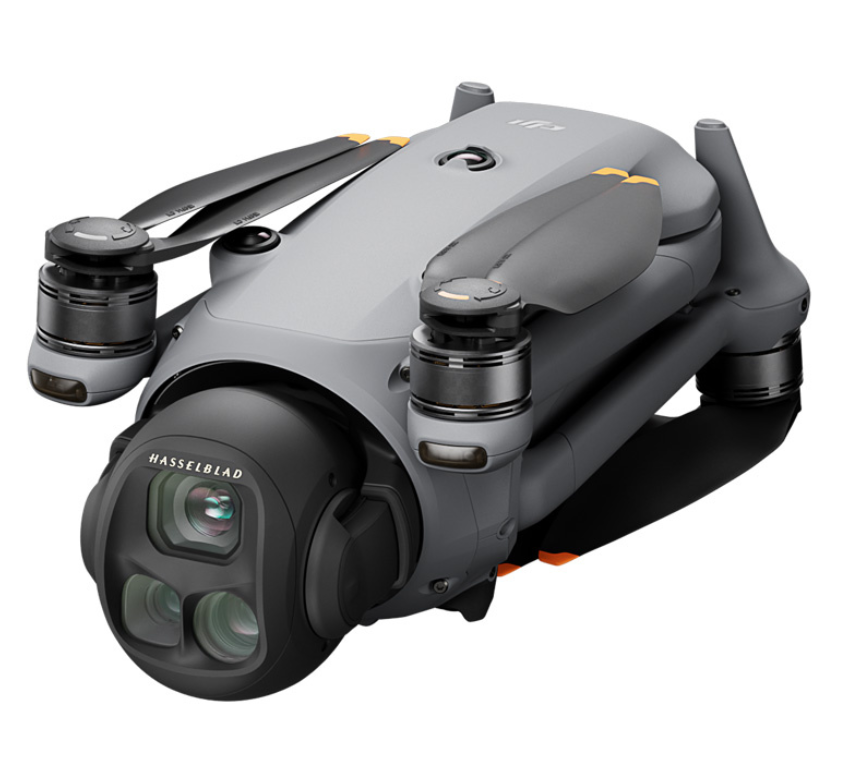
1. DJI Mavic 4 Pro — Best Overall for Cinematic Video
Approximate price: $2,199–$3,999, depending on configuration and seller
The DJI Mavic 4 Pro represents the premium end of the folding camera-drone category. Its triple-camera system, large main sensor, and advanced gimbal design make it an attractive option for filmmakers who need cinematic landscapes, commercial property footage, travel films, and high-quality establishing shots.
Its main camera features a 100MP, 4/3-inch Hasselblad sensor and an adjustable f/2.0–f/11 aperture. The system records video at up to 6K/60fps, providing substantial resolution for editing, reframing, and producing high-quality deliverables. Two additional cameras provide different focal lengths, making it possible to capture a wide landscape and then move to a tighter composition without changing aircraft.
Another important feature is the redesigned gimbal, which offers greater movement flexibility than conventional camera-drone gimbals. This can help filmmakers create unusual compositions and dynamic transitions.
DJI specifies a maximum flight time of 51 minutes under ideal testing conditions. Actual flight time depends on wind, temperature, flight style, and other factors.
Key specifications
| Feature | Specification |
|---|---|
| Main camera | 100MP, 4/3-inch Hasselblad sensor |
| Maximum video resolution | 6K/60fps |
| Main camera aperture | f/2.0–f/11 |
| Camera system | Triple camera |
| Maximum rated flight time | 51 minutes |
| Stabilization | Mechanical gimbal |
| Best application | Cinematic, commercial, and travel video |
Pros
- Large main sensor for detailed, high-quality footage.
- Three cameras provide useful focal-length flexibility.
- Adjustable aperture gives better exposure control.
- 6K recording offers additional room for cropping and reframing.
- Long rated flight time supports more ambitious shots.
Cons
- More expensive than most consumer camera drones.
- Large file sizes can increase storage and editing requirements.
- Three-camera systems require attention to exposure and color consistency between lenses.
- US availability, warranty coverage, and seller reliability require careful verification.
Verdict
The Mavic 4 Pro is an excellent choice for filmmakers seeking a versatile, premium camera drone without moving to a dedicated cinema platform. Its combination of image quality, lens flexibility, and flight performance makes it particularly attractive for professional content creation.
However, US buyers should verify availability and warranty coverage before purchasing. Its advanced features are valuable only if the aircraft can be obtained through a reliable sales and support channel.
2. DJI Mavic 3 Pro — Best for Versatile Professional Filmmaking

Approximate US list price: $2,199 for the standard configuration
The DJI Mavic 3 Pro remains a compelling choice for filmmakers who want a sophisticated camera system without the expense and operational complexity of a dedicated cinema drone.
Its standout feature is the triple-camera arrangement. The primary Hasselblad camera uses a 4/3-inch CMOS sensor, while the two telephoto cameras provide medium and longer focal lengths. This arrangement is particularly useful for commercial filmmaking, outdoor productions, tourism videos, and real-estate marketing.
The main camera records video at up to 5.1K/50fps and supports 4K recording at up to 120fps. The higher frame rates can be useful for creating slow-motion sequences, while the 10-bit D-Log M profile provides additional flexibility during color grading.
The medium-telephoto camera is especially useful for isolating subjects and producing compressed perspectives. The longer telephoto camera can capture distant details without requiring the drone to approach the subject as closely.
DJI rates the Mavic 3 Pro for up to 43 minutes of flight time, although practical flight sessions will generally be shorter.
Key specifications
| Feature | Specification |
|---|---|
| Main camera | 4/3-inch Hasselblad CMOS |
| Additional cameras | 70mm medium telephoto and 166mm telephoto |
| Maximum main-camera resolution | 5.1K/50fps |
| Slow-motion recording | Up to 4K/120fps on the main camera |
| Color profile | 10-bit D-Log M |
| Maximum rated flight time | 43 minutes |
| Obstacle sensing | Omnidirectional |
| Best application | Commercial filmmaking and versatile aerial coverage |
Pros
- Excellent main-camera image quality.
- Three focal lengths provide considerable creative flexibility.
- 10-bit recording supports professional color grading.
- Slow-motion options expand creative possibilities.
- Strong combination of portability and performance.
Cons
- The telephoto cameras have smaller sensors than the main camera.
- The aircraft is less portable than a Mini-series drone.
- Professional accessories and extra batteries increase the total cost.
- Standard and Cine configurations have significantly different recording capabilities.
Verdict
The Mavic 3 Pro is one of the most balanced choices for professional aerial filmmaking. Its triple-camera arrangement can save time on commercial shoots, while its main camera delivers the image quality needed for polished promotional films and online video.
It is especially suitable for independent filmmakers who need multiple perspectives but do not require the interchangeable lenses or cinema-grade RAW recording available on more expensive equipment.
The standard model offers the strongest value for most users. The Cine version is worth considering when professional editing workflows justify the additional expense.
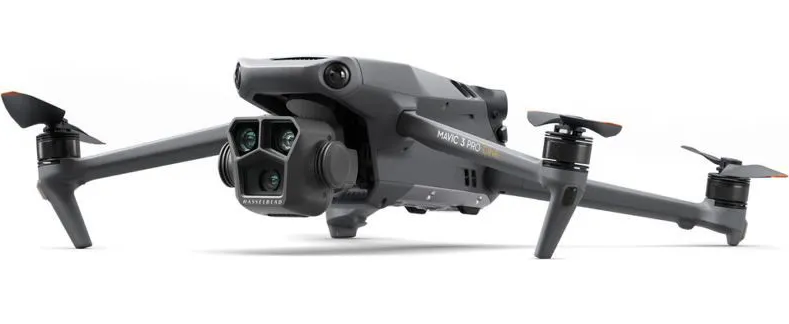
3. DJI Mavic 3 Pro Cine — Best for Professional Post-Production
Approximate US list price: $4,799
The DJI Mavic 3 Pro Cine is aimed at filmmakers who need more than excellent footage straight out of the camera. It builds on the Mavic 3 Pro platform but adds recording capabilities designed for demanding post-production workflows.
Its most important advantage is support for Apple ProRes recording across all three cameras. ProRes can be particularly useful when footage will undergo extensive color correction, compositing, or integration with material from professional cinema cameras.
The Cine configuration also includes a built-in 1TB SSD, providing substantial onboard storage for high-bitrate recordings.
These features make the drone appealing for commercial agencies, production companies, independent filmmakers, and experienced content creators who want to reduce compromises in their aerial footage.
The three-camera system offers the same general creative advantage as the standard Mavic 3 Pro: filmmakers can move between wide, medium-telephoto, and telephoto perspectives without changing aircraft.
However, the benefit of ProRes depends on the entire production workflow. If the final destination is a compressed social-media video, the improvement over a well-recorded standard file may not justify the additional cost.
Key specifications
| Feature | Specification |
|---|---|
| Main camera | 4/3-inch Hasselblad CMOS |
| Camera system | Triple camera |
| Maximum main-camera resolution | 5.1K/50fps |
| Professional recording format | Apple ProRes 422 family |
| Internal storage | 1TB SSD |
| Maximum rated flight time | 43 minutes |
| Best application | Commercial films and demanding post-production |
Pros
- ProRes recording across all three cameras.
- Built-in 1TB SSD.
- Flexible focal lengths for professional productions.
- High-quality footage suitable for detailed color grading.
- More portable and affordable than a dedicated cinema platform.
Cons
- Considerably more expensive than the standard Mavic 3 Pro.
- High-bitrate files consume substantial storage.
- Professional recording formats require capable editing hardware and sufficient storage bandwidth.
- The camera system is not interchangeable in the same way as a dedicated cinema drone’s.
Verdict
The Mavic 3 Pro Cine is best for filmmakers who regularly deliver commercial work and need dependable, flexible recording formats.
For a production company, the ability to record ProRes and retain footage on a built-in SSD can justify the premium. For hobbyists and most social-media creators, however, the standard Mavic 3 Pro is likely to offer better value.
Before buying, confirm the exact configuration and warranty availability in the United States. The Cine premium makes little sense if the additional recording capabilities will rarely be used.
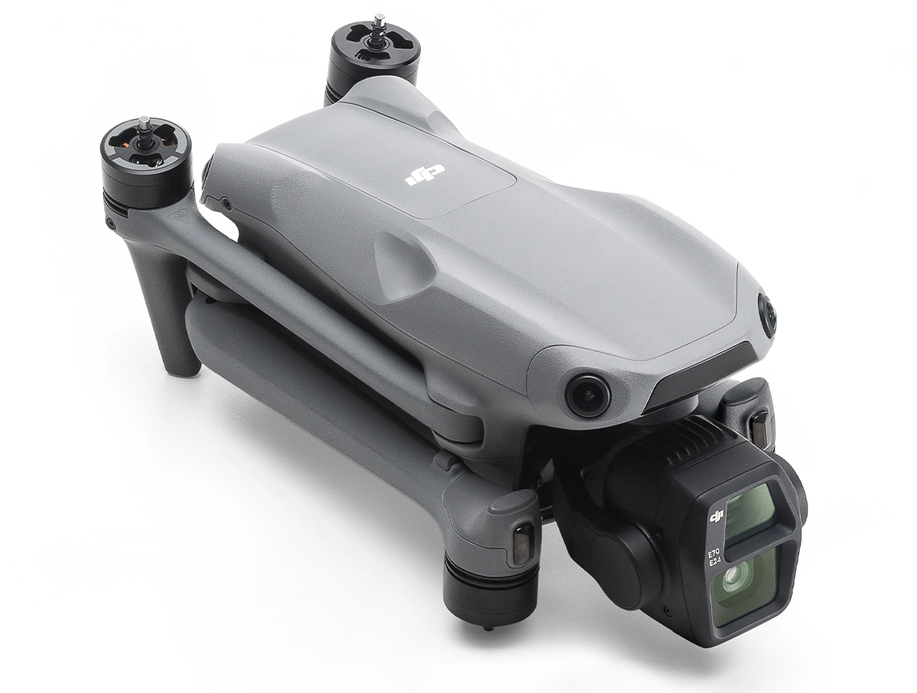
4. DJI Air 3S — Best Value for Professional-Looking Video
US list price: From $1,099
The DJI Air 3S is an attractive option for filmmakers who want high-quality aerial footage without spending flagship-level money.
Its dual-camera system combines a 1-inch CMOS wide-angle camera with a 1/1.3-inch medium-telephoto camera. This provides two useful perspectives for landscape videos, travel films, property tours, and online content.
The wide-angle camera records 4K video at up to 60fps HDR or 4K/120fps for slow motion. The telephoto camera provides a tighter perspective for isolating subjects and adding visual variety.
The 1-inch main sensor is a significant part of the Air 3S’s appeal. Although it is smaller than the Mavic 3 Pro’s 4/3-inch sensor, it can deliver excellent results when paired with appropriate exposure, good lighting, and careful post-production.
The drone also includes omnidirectional obstacle sensing and forward-facing LiDAR. These systems can help detect obstacles, particularly when lighting conditions are challenging, although they do not eliminate the need for careful piloting.
DJI specifies a maximum flight time of 45 minutes.
Key specifications
| Feature | Specification |
|---|---|
| Main camera | 1-inch CMOS, 50MP |
| Secondary camera | 1/1.3-inch medium telephoto |
| Maximum video resolution | 4K/120fps |
| HDR video | 4K/60fps HDR |
| Color profile | 10-bit D-Log M |
| Maximum rated flight time | 45 minutes |
| Obstacle sensing | Omnidirectional, with forward-facing LiDAR |
| Best application | Travel films, commercial content, and landscapes |
Pros
- Strong image quality for the price.
- Two cameras provide greater creative flexibility than a single-camera drone.
- 4K/120fps supports slow-motion footage.
- Long rated flight time.
- Advanced obstacle-sensing features.
Cons
- Smaller main sensor than the Mavic 3 Pro.
- No third, long-telephoto camera.
- Less suitable for productions that require the most demanding cinema recording formats.
- Extra batteries and accessories can raise the total cost.
Verdict
The Air 3S is arguably the most practical choice for many independent creators. It combines good video quality, useful lens flexibility, advanced flight assistance, and a substantially lower purchase price than premium flagship models.
It is particularly suitable for travel filmmakers, real-estate videographers, YouTube creators, and small production teams.
Unless you specifically need the larger sensor and third camera of the Mavic 3 Pro, the Air 3S offers an excellent balance between performance and cost.
5. DJI Inspire 3 — Best for High-End Cinema Production
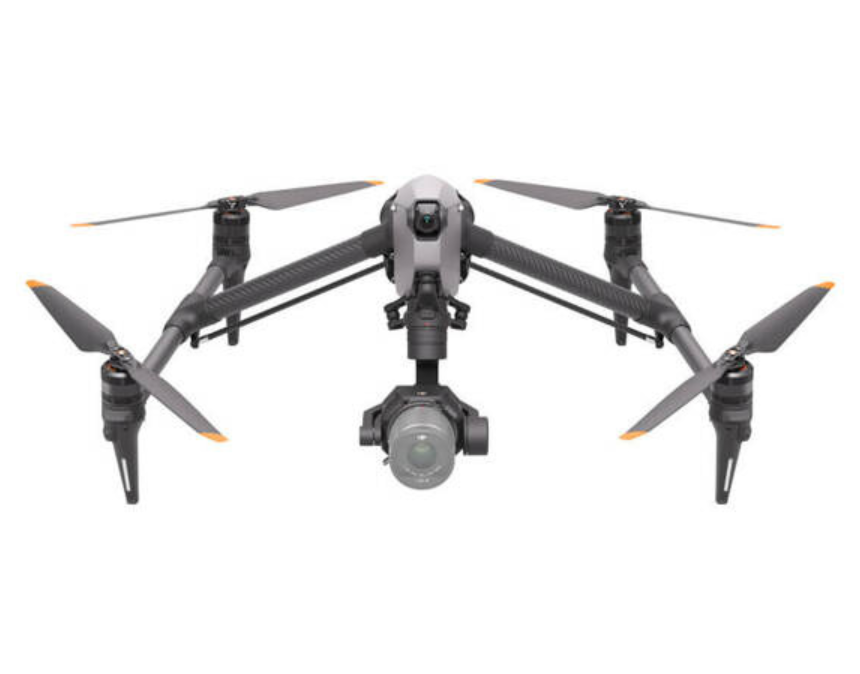
US list price: $16,499
The DJI Inspire 3 belongs to a different category from conventional folding camera drones. It is a professional cinematography platform designed for productions where camera performance, operator control, and post-production flexibility are more important than portability or price.
Its full-frame Zenmuse X9-8K Air camera records up to 8K/75fps in Apple ProRes RAW and 8K/25fps in CinemaDNG. DJI also specifies more than 14 stops of dynamic range, giving cinematographers greater latitude when working with demanding lighting conditions.
The camera supports interchangeable DL-mount lenses, allowing the production team to select focal lengths according to the shot rather than relying on a fixed collection of integrated cameras.
Another important advantage is dual-operator capability. A pilot can concentrate on safe aircraft control while a dedicated camera operator manages framing and camera movement.
The Inspire 3 also supports RTK positioning and repeatable flight paths, which can help production teams reproduce shots across multiple takes or filming sessions.
DJI rates its maximum flight time at approximately 28 minutes, making careful battery planning essential.
Key specifications
| Feature | Specification |
|---|---|
| Camera sensor | Full-frame |
| Maximum video resolution | 8K |
| Maximum RAW recording | 8K/75fps ProRes RAW |
| CinemaDNG recording | Up to 8K/25fps |
| Dynamic range | More than 14 stops |
| Lens system | Interchangeable DL-mount lenses |
| Maximum rated flight time | Approximately 28 minutes |
| Best application | Feature films, commercials, and high-end cinema |
Pros
- Full-frame imaging system.
- High-resolution RAW recording.
- Interchangeable lenses.
- Dual-operator workflow.
- Advanced positioning and repeatable flight paths.
- Designed for professional cinematography rather than casual flying.
Cons
- Very high initial purchase price.
- Additional lenses and production accessories can substantially increase the investment.
- Shorter rated flight time than many folding camera drones.
- Requires more planning, equipment, and operator expertise.
- Excessive for many online-video and small-business applications.
Verdict
The Inspire 3 is the strongest choice in this selection for high-end cinema production. Its full-frame sensor, RAW recording capabilities, interchangeable lenses, and dual-operator workflow make it better suited to demanding productions than consumer-oriented camera drones.
However, the price is difficult to justify for most independent creators. It makes the most sense for established production companies, experienced aerial cinematographers, and teams working on projects where image quality and repeatable camera movement are central requirements.
For filmmakers who need a professional image but do not require 8K RAW or interchangeable lenses, the Mavic 3 Pro Cine is a much more economical alternative.
6. Autel EVO Lite+ — Best Alternative for Manual Camera Control
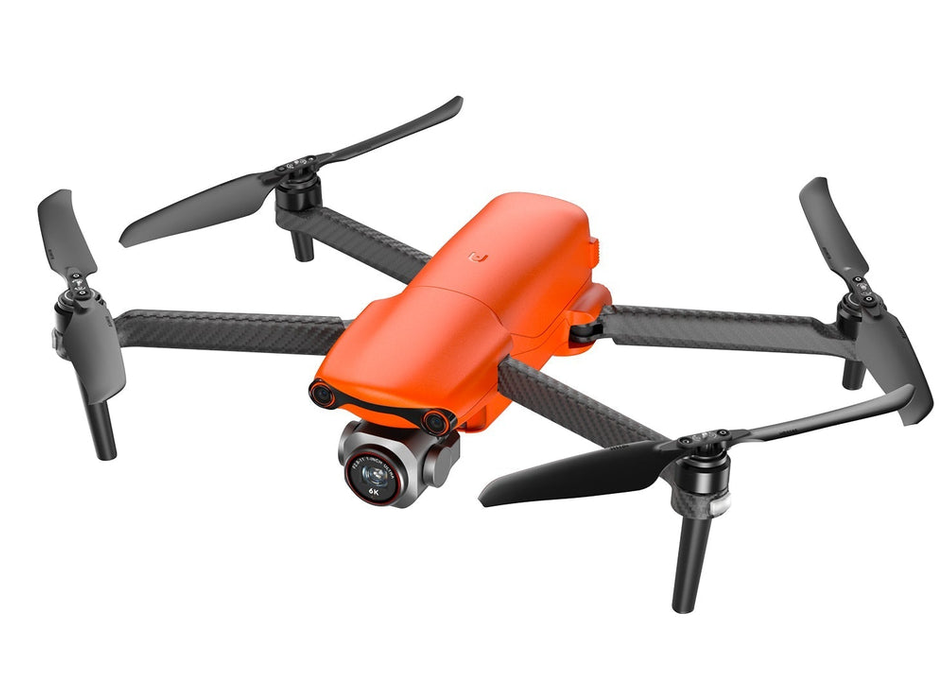
US list price: $1,149
The Autel EVO Lite+ is an alternative to DJI’s mainstream camera drones, particularly for creators who value manual exposure control and a straightforward aerial-filming workflow.
Its camera uses a 1-inch, 20MP CMOS sensor and records video at up to 6K/30fps. The adjustable aperture ranges from f/2.8 to f/11, allowing the operator to control exposure more precisely as lighting conditions change.
This flexibility can be useful for filmmakers who want to maintain a consistent shutter speed while adjusting exposure with the aperture. It also makes it easier to work with neutral-density filters when shooting in bright daylight.
Autel specifies a maximum flight time of 40 minutes. Its folding design makes it reasonably convenient for travel, while its camera system is capable of producing detailed footage for landscapes, outdoor videos, and commercial content.
However, the EVO Lite+ is an older platform, and its specifications should be evaluated in the context of newer alternatives. Its 6K recording is useful, but it does not offer the same combination of high-frame-rate recording and advanced camera flexibility as some newer drones.
Key specifications
| Feature | Specification |
|---|---|
| Camera sensor | 1-inch CMOS |
| Photo resolution | 20MP |
| Maximum video resolution | 6K/30fps |
| Aperture | f/2.8–f/11 |
| Maximum rated flight time | 40 minutes |
| Obstacle avoidance | Forward, backward, and downward |
| Best application | Landscapes, outdoor filmmaking, and manual exposure control |
Pros
- 6K video recording.
- Adjustable aperture.
- Large sensor for its class.
- Good rated flight endurance.
- An alternative to DJI’s camera-drone ecosystem.
Cons
- No dedicated telephoto camera.
- Obstacle avoidance is less comprehensive than on some newer models.
- Limited high-frame-rate options compared with more recent alternatives.
- Older hardware may offer less sophisticated tracking and automation.
- Buyers should verify current support, accessories, and service availability.
Verdict
The EVO Lite+ remains an interesting option for filmmakers who prioritize manual exposure control and want an alternative to DJI.
Its adjustable aperture and 6K recording make it capable of producing excellent footage, especially for landscapes and controlled outdoor shoots.
However, buyers should compare it directly with the DJI Air 3S before purchasing. The Air 3S offers a newer feature set, dual cameras, and more advanced obstacle sensing. The Autel is most appealing when its camera controls, ecosystem, or current US availability better match the buyer’s needs.
7. DJI Avata 2 — Best for Immersive FPV Video

US price reference: Approximately $849–$1,019, depending on package
Not every aerial video benefits from the smooth, distant perspectives associated with conventional camera drones. For fast-moving sequences, close passes, and immersive fly-through footage, a first-person-view drone can offer a very different creative approach.
The DJI Avata 2 is designed for this style of flying. Its compact aircraft, FPV controls, and compatible goggles let the pilot experience the flight from the drone’s perspective.
The camera records up to 4K/60fps, with a wide field of view that suits dynamic movement. It also supports 10-bit D-Log M, providing additional flexibility when color grading footage.
Unlike a conventional three-axis camera-drone system, the Avata 2’s footage is designed around FPV flying and its associated stabilization workflow. This makes it suitable for cinematic fly-throughs, action sequences, and immersive promotional videos.
The trade-off is that FPV footage requires a different shooting technique. Smooth results depend on the pilot’s control, flight path, and ability to manage speed and movement.
Key specifications
| Feature | Specification |
|---|---|
| Camera | 1/1.3-inch CMOS |
| Maximum video resolution | 4K/60fps |
| Color profile | 10-bit D-Log M |
| Stabilization | RockSteady and HorizonSteady |
| Flight style | First-person view |
| Best application | Dynamic fly-throughs and immersive aerial footage |
Pros
- Distinctive FPV perspectives.
- Compact design.
- 4K recording.
- 10-bit color profile.
- Well suited to fast-moving, immersive shots.
Cons
- Not as versatile as a conventional camera drone for slow, cinematic establishing shots.
- Requires practice to produce consistently smooth footage.
- Goggles and additional accessories increase the total cost.
- Shorter endurance than many conventional camera drones.
- FPV flying requires particular attention to surroundings and applicable flight rules.
Verdict
The Avata 2 is an excellent specialist tool for filmmakers who want footage that conventional camera drones cannot easily reproduce.
It works particularly well for automotive videos, action content, indoor fly-throughs where permitted, and dynamic real-estate sequences.
However, it should not be treated as a direct replacement for the Mavic 3 Pro or Air 3S. Its strengths lie in immersive movement rather than maximum sensor size, long flight endurance, or multi-camera versatility.
For production teams that need both traditional aerial footage and dynamic FPV sequences, pairing an Avata 2 with a conventional camera drone can be more effective than expecting a single aircraft to do everything.
8. DJI Mini 5 Pro — Best Compact Drone for Travel Filmmaking
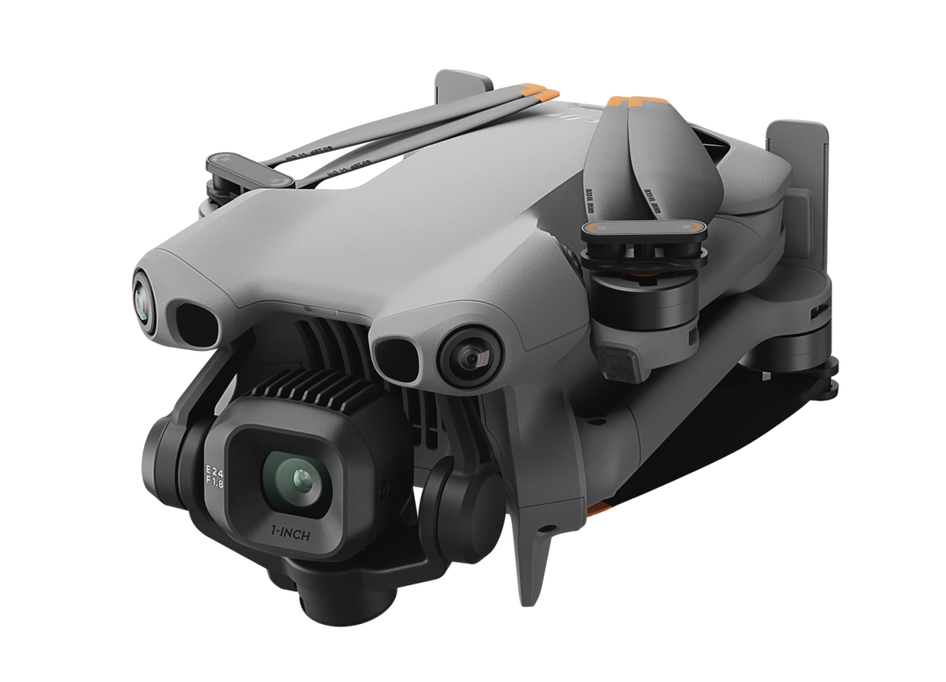
US budget reference: Approximately $759–$1,000; verify the exact model and seller
A professional-looking aerial video does not always require a large aircraft. For travel filmmakers, solo creators, and outdoor enthusiasts, portability can be just as important as sensor size.
The DJI Mini 5 Pro belongs to the compact camera-drone category, offering advanced imaging features in a lightweight folding design. Its appeal is straightforward: it can be easier to carry, quicker to deploy, and less cumbersome during trips where a larger drone would be inconvenient.
Its camera features a 1-inch sensor and supports 4K recording at up to 120fps. This combination is particularly attractive for travel videos, landscape sequences, social-media content, and slow-motion shots.
The compact design is also useful for creators who frequently move between locations or need to carry camera equipment alongside hiking, camping, or travel gear.
However, the Mini 5 Pro’s weight and regulatory classification should be checked for the exact configuration. A drone’s weight, battery choice, and intended use can affect which US requirements apply.
US availability also needs particular attention. Do not assume that a price advertised by an international seller represents an authorized US product with a valid local warranty.
Key specifications
| Feature | Specification |
|---|---|
| Camera sensor | 1-inch CMOS |
| Maximum video resolution | 4K/120fps |
| Design | Compact, folding drone |
| Main advantage | Portability |
| Best application | Travel filmmaking and outdoor content |
Pros
- Easy to carry compared with larger flagship drones.
- 1-inch sensor in a compact format.
- 4K/120fps recording.
- Convenient for solo creators.
- Well suited to travel and outdoor filming.
Cons
- Smaller aircraft can be more affected by challenging wind conditions.
- Less camera and lens flexibility than triple-camera flagship models.
- Not a replacement for a dedicated cinema platform.
- US availability, pricing, and warranty coverage should be verified carefully.
Verdict
The Mini 5 Pro is a compelling option for creators who want to capture high-quality aerial footage while keeping their equipment lightweight.
It is particularly suitable for travel films, hiking videos, outdoor storytelling, and social-media content. Its compact form makes it easier to carry regularly, which can be more valuable than having the largest sensor or the most advanced recording formats.
For filmmakers who mainly produce travel and lifestyle content, it may offer a better practical experience than a heavier, more expensive flagship.
Final comparison: Which professional video drone should you buy?
The best drone depends on the kind of footage you produce, the recording formats you need, and the amount you are prepared to spend.
The following tables summarize the most important differences between our eight picks.
Camera and video comparison
| Model | Main camera | Maximum video resolution | Camera configuration | Best video application |
|---|---|---|---|---|
| DJI Mavic 4 Pro | 4/3-inch, 100MP | 6K/60fps | Triple camera | Premium cinematic footage |
| DJI Mavic 3 Pro | 4/3-inch Hasselblad | 5.1K/50fps | Triple camera | Commercial filmmaking |
| DJI Mavic 3 Pro Cine | 4/3-inch Hasselblad | 5.1K/50fps | Triple camera with ProRes | Professional post-production |
| DJI Air 3S | 1-inch, 50MP | 4K/120fps | Dual camera | Travel and commercial video |
| DJI Inspire 3 | Full-frame | 8K/75fps ProRes RAW | Interchangeable lenses | High-end cinema |
| Autel EVO Lite+ | 1-inch, 20MP | 6K/30fps | Single camera | Landscapes and manual control |
| DJI Avata 2 | 1/1.3-inch CMOS | 4K/60fps | FPV camera | Dynamic fly-throughs |
| DJI Mini 5 Pro | 1-inch CMOS | 4K/120fps | Compact camera drone | Travel and outdoor content |
Flight and practical-use comparison
| Model | Maximum rated flight time | Portability | Main advantage | Main limitation |
|---|---|---|---|---|
| DJI Mavic 4 Pro | 51 minutes | High | Advanced triple-camera system | US-market availability |
| DJI Mavic 3 Pro | 43 minutes | High | Versatile focal lengths | Higher price than midrange models |
| DJI Mavic 3 Pro Cine | 43 minutes | High | ProRes and 1TB SSD | Expensive storage-oriented configuration |
| DJI Air 3S | 45 minutes | High | Excellent balance of features and price | Smaller sensor than the Mavic 3 Pro |
| DJI Inspire 3 | 28 minutes | Low | Cinema-grade imaging | High cost and operational complexity |
| Autel EVO Lite+ | 40 minutes | High | Adjustable aperture | Older feature set |
| DJI Avata 2 | Varies by configuration and conditions | High | Immersive FPV movement | Requires specialized piloting |
| DJI Mini 5 Pro | Varies by battery and conditions | Very high | Compact design | Less camera flexibility |
Final verdict: The best flagship drone for video in 2026
After comparing camera quality, recording formats, flight performance, portability, and cost, several models stand out for different reasons.
Best overall: DJI Mavic 4 Pro
The Mavic 4 Pro offers an impressive combination of a large main sensor, three cameras, 6K recording, and long rated flight time. It is an excellent choice for filmmakers who want a premium all-in-one aerial camera. US buyers should verify local availability and warranty conditions before committing.
Best for most professional creators: DJI Mavic 3 Pro
The Mavic 3 Pro remains a highly versatile tool for commercial videos, property marketing, travel films, and professional online content. Its three cameras provide creative flexibility without the price and complexity of a dedicated cinema platform.
Best for professional post-production: DJI Mavic 3 Pro Cine
For production teams that regularly work with ProRes footage, the Cine configuration offers a meaningful workflow advantage. Its built-in 1TB SSD and professional recording formats are particularly useful for projects requiring extensive editing and color grading.
Best value: DJI Air 3S
The Air 3S is the most sensible starting point for many creators who need excellent video quality without paying flagship prices. Its dual cameras, 4K/120fps recording, and advanced obstacle sensing make it suitable for a broad range of commercial and personal projects.
Best for cinema: DJI Inspire 3
For high-end film production, the Inspire 3 stands apart. Its full-frame camera, interchangeable lenses, and RAW recording capabilities make it the most specialized and expensive option in this guide. It is best suited to professional crews that can take advantage of its advanced features.
Best alternative to DJI: Autel EVO Lite+
The EVO Lite+ remains worth considering for creators who value its adjustable aperture and 6K recording. However, buyers should compare its older feature set with newer alternatives and check current US support arrangements.
Best for FPV: DJI Avata 2
For immersive fly-throughs and dynamic action footage, the Avata 2 offers a distinctive perspective that conventional camera drones cannot easily replicate.
Best compact option: DJI Mini 5 Pro
The Mini 5 Pro is ideal for travel filmmakers who value portability and want advanced video capabilities in a smaller package. Confirm US availability and warranty coverage before buying.
Our recommendation
For most readers of SEE2GET, the DJI Air 3S is the best starting point, offering an excellent balance of video quality, flight performance, and price. Creators who need more camera flexibility should consider the Mavic 3 Pro, while filmmakers who prioritize professional recording formats may find the Mavic 3 Pro Cine worth the extra investment.
The Inspire 3 belongs in a different category, serving production teams that need cinema-grade capabilities rather than a general-purpose flying camera.
Ultimately, the best professional video drone is not necessarily the most expensive or the one with the highest resolution. It is the aircraft that consistently delivers the footage your projects require, fits your workflow, and provides reliable support in the market where you intend to use it.
Before buying, budget for additional batteries, memory cards or storage, ND filters, insurance where appropriate, and any required registration or operational authorizations. In the United States, recreational and commercial pilots must also follow applicable FAA rules, including Remote ID requirements where applicable. Commercial operations generally require compliance with Part 107.
The bottom line: Choose the Air 3S for value, the Mavic 3 Pro for versatile professional filming, the Mavic 3 Pro Cine for demanding post-production, and the Inspire 3 for high-end cinema. For specialized FPV footage, the Avata 2 fills a role that no conventional camera drone can completely replace.
Frequently Asked Questions About Professional Video Drones
1. What is the best professional drone for video in 2026?
The best professional drone depends on your production needs and budget. The DJI Mavic 4 Pro is an excellent flagship option for cinematic aerial footage, while the DJI Mavic 3 Pro offers a versatile triple-camera system for commercial filmmaking. For high-end cinema production, the DJI Inspire 3 provides a full-frame camera, interchangeable lenses, and professional RAW recording capabilities.
For most independent creators, the DJI Air 3S offers an attractive balance of video quality, features, and price.
2. Which drone has the best video quality?
The DJI Inspire 3 is the strongest choice in this selection for demanding cinema workflows, thanks to its full-frame camera, interchangeable lenses, and support for 8K RAW recording.
For a more portable solution, the DJI Mavic 4 Pro combines a large main sensor with a versatile triple-camera system. The DJI Mavic 3 Pro Cine is another excellent option for filmmakers who prioritize professional recording formats and post-production flexibility.
Remember that resolution alone does not determine video quality. Sensor size, dynamic range, lens quality, exposure control, and recording formats also play important roles.
3. Is a 4K drone good enough for professional filmmaking?
Yes. A good 4K drone can produce professional-quality footage suitable for commercials, travel films, real-estate videos, documentaries, and online advertising.
4K provides sufficient detail for most distribution platforms, including YouTube and commercial websites. Higher resolutions, such as 5.1K, 6K, and 8K, provide additional flexibility for cropping, reframing, and post-production.
For most creators, a drone with a high-quality sensor, reliable stabilization, and a professional color profile is a better investment than choosing a model based on resolution alone.
4. What is the difference between the DJI Mavic 3 Pro and Mavic 3 Pro Cine?
Both drones feature a triple-camera system with a 4/3-inch Hasselblad main camera and additional telephoto cameras.
The main difference is their recording workflow. The Mavic 3 Pro Cine supports Apple ProRes recording across its three cameras and includes a built-in 1TB SSD. These features make it more suitable for professional editing and color-grading workflows.
The standard Mavic 3 Pro is more affordable and offers excellent image quality for most commercial projects. The Cine version is worth the extra cost when its recording capabilities will benefit your production.
5. Which drone is best for cinematic aerial shots?
The DJI Mavic 4 Pro and DJI Mavic 3 Pro are excellent choices for cinematic aerial shots. Their camera systems offer different focal lengths, helping filmmakers capture wide landscapes, dramatic perspectives, and tightly framed subjects.
The DJI Inspire 3 is better suited to productions that require a dedicated cinema platform, interchangeable lenses, and advanced camera control.
For cinematic footage, smooth flight movements, appropriate shutter speed, good lighting, and careful composition are just as important as the drone itself.
6. How long can a professional video drone fly?
Flight time varies by model, battery, and environmental conditions.
Among the drones in this guide, manufacturer-rated maximum flight times range from approximately 28 minutes for the DJI Inspire 3 to 51 minutes for the DJI Mavic 4 Pro.
However, advertised maximum flight times are measured under controlled conditions. Wind, temperature, flight speed, and battery condition can reduce real-world endurance.
For professional filming, carrying additional batteries is advisable so that you can complete multiple takes without depending on a single flight.
7. Is the DJI Air 3S good for professional video production?
Yes. The DJI Air 3S is a strong option for independent filmmakers, travel creators, real-estate videographers, and small production teams.
Its 1-inch main camera sensor, secondary telephoto camera, 4K/120fps recording, and 10-bit D-Log M profile provide useful capabilities for professional-looking footage.
Although it lacks the larger main sensor and three-camera arrangement of the Mavic 3 Pro, it offers an excellent balance of image quality, portability, and price.
8. Which drone is best for real-estate video?
The DJI Air 3S and DJI Mavic 3 Pro are both well suited to real-estate filmmaking.
The Air 3S offers a useful combination of a wide-angle camera, a telephoto camera, and a relatively accessible price. The Mavic 3 Pro adds a third camera and a larger main sensor, providing more flexibility for premium property marketing.
When filming real estate, smooth movements, accurate exposure, and well-planned flight paths are essential for presenting properties professionally.
Pilots must also follow applicable FAA requirements and respect property rights and privacy.
9. Are professional drones worth the extra money?
Professional drones can be worth the investment if their features improve your work or help you deliver better results to clients.
More expensive models may offer larger sensors, additional cameras, advanced recording formats, interchangeable lenses, or improved workflow integration.
However, not every filmmaker needs these features. A midrange drone such as the DJI Air 3S can produce excellent footage for many commercial applications.
Before investing in a flagship model, consider the type of work you produce, your clients’ requirements, and whether the additional capabilities will generate enough value to justify the cost.
10. What accessories should I buy with a professional video drone?
The most useful accessories depend on your shooting style, but several items can make a significant difference.
- Extra batteries: Allow longer filming sessions and reduce downtime.
- ND filters: Help control shutter speed in bright conditions.
- High-speed memory cards: Support compatible recording modes and reliable file transfers.
- Portable SSD storage: Useful for backing up footage on location.
- Carrying case: Protects the drone and makes transporting equipment easier.
- Charging hub: Simplifies battery management between flights.
- Drone insurance: Can help manage financial risks, depending on the policy and intended use.
For cinema-oriented drones, additional lenses, professional storage solutions, and dedicated monitoring equipment may also be necessary.
11. Can I use a professional drone for commercial filming in the United States?
Yes, but commercial drone operations must comply with applicable Federal Aviation Administration (FAA) requirements.
In the United States, most commercial drone operations fall under FAA Part 107. Requirements can include obtaining a Remote Pilot Certificate, registering the aircraft when required, complying with applicable Remote ID rules, and following restrictions concerning airspace, altitude, and operations over people.
Additional authorizations may be necessary for certain flights or locations.
Before filming, check the latest requirements on the official FAA website.
12. What should I check before buying a professional drone in the USA?
Before purchasing a drone, verify the following:
- US availability: Confirm that the exact model and configuration can be purchased through a reliable seller.
- Warranty coverage: Check whether the manufacturer or authorized service provider will support your aircraft in the United States.
- Final price: Compare the aircraft-only price with bundles that include additional batteries, controllers, and accessories.
- Camera capabilities: Make sure the supported resolution, frame rates, and recording formats match your workflow.
- Flight performance: Consider rated endurance, obstacle sensing, and operating conditions.
- Regulatory requirements: Check applicable FAA registration, Remote ID, and operational rules.
- Long-term support: Consider firmware updates, replacement parts, batteries, and repair options.
These checks are particularly important when buying premium equipment or considering models with uncertain US distribution.
13. Is a cinema drone better than a flagship consumer drone?
Not necessarily. A cinema drone such as the DJI Inspire 3 is designed for demanding productions that require advanced camera control, interchangeable lenses, and professional recording formats.
A flagship consumer drone such as the DJI Mavic 3 Pro or Mavic 4 Pro is generally more portable, easier to deploy, and less expensive.
For major commercial productions, a cinema drone can provide valuable creative and workflow advantages. For travel films, real-estate marketing, and most online videos, a flagship consumer drone may be the more practical choice.
14. Which professional video drone offers the best value for money?
For many independent creators, the DJI Air 3S offers the best balance of price, camera quality, and functionality.
The DJI Mavic 3 Pro is a better fit for users who need three cameras and greater focal-length flexibility. The DJI Mavic 3 Pro Cine is worth considering when ProRes recording is important to the editing workflow.
The best value ultimately depends on which features you will actually use. Paying for capabilities that do not improve your finished videos rarely makes financial sense.
SEE2GET buying advice: Before choosing a professional video drone, prioritize camera quality, recording formats, flight reliability, and the features your projects genuinely require. A well-matched drone can deliver better results and greater value than a more expensive model with capabilities you rarely use.
If you don’t have enough money to buy an expensive drone, we also discussed some budget-friendly options here.
One Reply to “8 Best Flagship Professional Drones for Video in 2026: Top Picks for Cinematic Aerial Filmmaking”
Comments are closed.