
Buying a used washing machine can be one of the best ways to get a genuinely well-built appliance without spending much money.
The trick is knowing which machines were designed with enough mechanical margin to survive years of use—and which ones are better left on the second-hand market.
A washing machine doesn’t necessarily become worthless because it is 8, 10 or even 15 years old. A good machine may need nothing more than a pump, door seal, brushes, suspension components or bearings during its lifetime. If the cabinet is solid, the drum spider is healthy, the electronics are working and replacement parts are available, an older premium or well-engineered machine can still have years of useful life ahead.
For this guide, we’re looking specifically for used machines with robust architecture, good repair potential, widely available parts and a reputation for surviving long-term ownership.
And there’s an important lesson from the repair market: the exact model and construction matter more than the logo on the front. Consumer repairability research currently ranks Bosch, LG and Miele particularly strongly, while European repair data also puts Miele, Bosch, Siemens and AEG among the stronger choices.
Quick Summary
| Rank | Used washing machine | Best for | SEE2GET durability rating | Typical used-buy target |
|---|---|---|---|---|
| 🥇 1 | Bosch WAE Series | Best cheap used buy | 9.6/10 | Low to moderate |
| 🥈 2 | Miele W1 | Best premium long-term buy | 9.5/10 | Moderate |
| 🥉 3 | Siemens iQ / iQ500 | Best Bosch alternative | 9.3/10 | Moderate |
| 4 | LG Direct Drive | Best motor architecture | 9.1/10 | Low to moderate |
| 5 | Older AEG Lavamat | Best repairable European alternative | 8.8/10 | Low |
Our main recommendation: If the goal is spending as little as possible while maximizing the amount of useful life remaining, look first for a well-maintained Bosch WAE.
If your budget is higher and you want a machine with an unusually large durability margin, a used Miele W1 can be the better long-term purchase.
What Makes a Used Washing Machine Worth Buying?
There are four things we care about more than fancy programs or smartphone connectivity.
1. Mechanical simplicity
The fewer unnecessary systems a machine has, the fewer things there are to fail.
A washing machine fundamentally needs:
- A motor
- Drum and bearings
- Pump
- Heater
- Valves
- Suspension
- Door lock
- Control electronics
Everything else is secondary.
A machine with a straightforward mechanical layout can remain economical to repair long after its original retail value has disappeared.
2. Replaceable wear components
Bearings, pumps, door seals, brushes and suspension components are wear items.
That’s not necessarily a bad thing.
A machine designed so these components can be replaced is often preferable to one where a relatively inexpensive failure requires replacement of an entire drum assembly.
This is why repairability is such an important part of used-appliance value.
3. Spare parts availability
A 15-year-old machine is only a bargain if you can still obtain the parts.
Miele says it keeps around 70,000 functionally important spare parts for up to 15 years after series production ends, with some parts available even longer.
Bosch and Siemens also benefit from the huge BSH parts ecosystem, which makes older machines considerably easier to keep running than obscure appliances.
4. Structural durability
This is the part sellers don’t advertise.
Look for:
- Solid cabinet construction
- Strong door hinges
- Robust drum spider
- Good-quality bearings
- Strong suspension
- Accessible pump/filter
- Serviceable motor
- Replaceable seals
- Minimal corrosion
A machine can have a slightly scratched exterior and still be mechanically excellent.
Conversely, a beautiful-looking used washer with worn bearings can be a terrible purchase.
1. Bosch WAE Series — Best Cheap Used Washing Machine
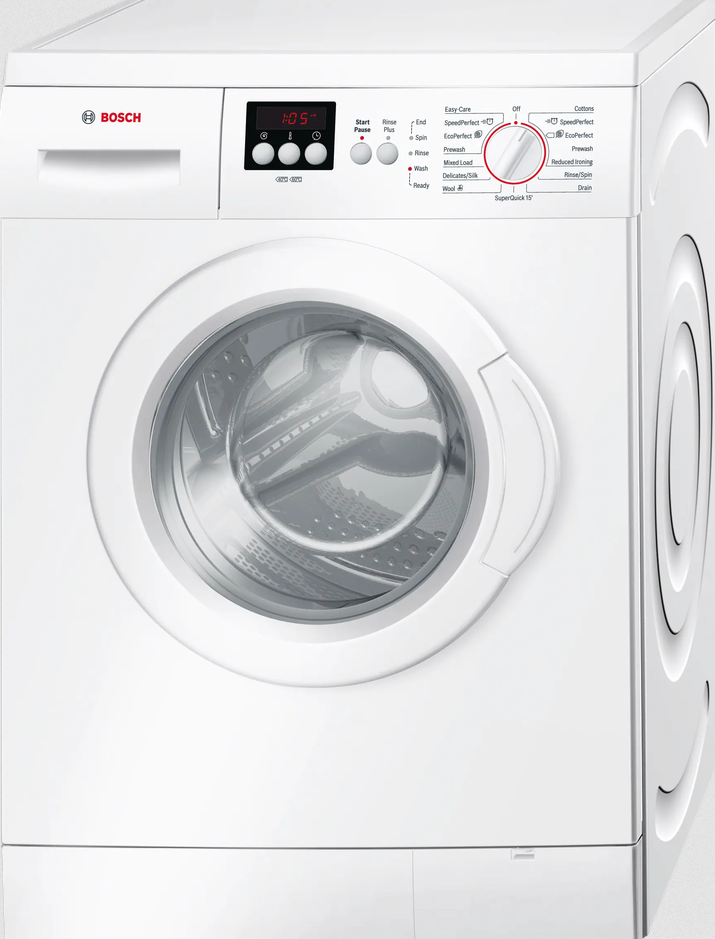
SEE2GET Durability Rating: 9.6/10
If we had to choose one used washing machine for someone on a tight budget, the older Bosch WAE series would be near the top of our list.
This is not because every WAE is indestructible. It is because this generation of Bosch washers has developed an unusually strong reputation among repair-focused owners, particularly in European second-hand markets.
A 2026 Polish repair discussion specifically singled out the Bosch WAE series as a strong used choice, with experienced forum members highlighting its repairability and durable construction.
Why the WAE is interesting
The WAE generation predates much of today’s obsession with adding increasingly complicated electronic features.
That’s exactly what we like about it as a used appliance.
It’s a relatively conventional washing machine with a huge installed base.
That means:
- Plenty of machines have been sold
- Parts are relatively easy to find
- Technicians know the platform
- Used parts are available
- Repair information is widespread
- There are many examples on the second-hand market
And when you buy used, that ecosystem matters.
Bosch WAE rating
| Category | Score |
|---|---|
| Mechanical durability | 9.7/10 |
| Repairability | 9.7/10 |
| Parts availability | 9.8/10 |
| Electronics simplicity | 9.2/10 |
| Used-market value | 9.9/10 |
| Long-term potential | 9.6/10 |
| Overall | 9.6/10 |
What to look for
Don’t simply search for “Bosch WAE.”
Check the individual machine.
Ideally, look for one that:
- Spins quietly
- Has no drum play
- Has no rust around the cabinet
- Has a clean detergent drawer
- Pumps water quickly
- Doesn’t jump excessively during spin
- Has a healthy door seal
- Hasn’t been stored outside
- Has a seller willing to demonstrate a complete wash or spin
The biggest advantage
Price.
Older WAE machines can be found extremely cheaply because many buyers assume an older appliance isn’t worth having.
That’s precisely the opportunity.
A €50–€100 machine that needs a €20–€50 consumable part can make more financial sense than a €400 budget washer with questionable long-term repairability.
The biggest disadvantage
Age.
Some examples are now genuinely old, so condition becomes everything.
SEE2GET verdict: The ultimate “boring but sensible” used washing machine. If you find a clean, quiet WAE at the right price, don’t dismiss it because of its age.
2. Miele W1 — Best Premium Used Washing Machine

SEE2GET Durability Rating: 9.5/10
If the Bosch WAE represents cheap durability, the Miele W1 represents buy once and keep repairing it.
Miele has deliberately positioned its washing machines around longevity and repairability. The company says its appliances are designed with repair in mind and that essential spare parts are stocked for up to 15 years after series production ends, often longer.
Independent repairability data also puts Miele at the top of European washing-machine rankings, with several W1 models receiving exceptionally high repairability scores.
Why Miele makes sense used
The biggest advantage of buying a used Miele is that you’re potentially getting a machine that originally cost considerably more than an ordinary mass-market washer.
That means you’re buying into:
- Heavy-duty construction
- High-quality components
- Strong suspension
- Excellent drum construction
- Sophisticated but serviceable engineering
- Strong parts support
- Long-term manufacturer support
Miele’s W1 platform is also designed around long service rather than disposable ownership.
Miele W1 rating
| Category | Score |
|---|---|
| Mechanical durability | 9.8/10 |
| Repairability | 9.4/10 |
| Parts availability | 9.9/10 |
| Build quality | 9.9/10 |
| Used-market value | 8.5/10 |
| Long-term potential | 9.7/10 |
| Overall | 9.5/10 |
But there’s a catch
A cheap Miele isn’t automatically a bargain.
This is especially important with bearings.
A W1 can be worth repairing when a relatively inexpensive component fails, but major repairs on an old machine can become expensive because of the labor involved.
That’s why condition matters enormously.
If you find a Miele W1 for €100 that sounds like a jet engine during spin, don’t assume you’ve discovered a bargain.
You may have discovered a large repair bill.
How to test one
Before buying:
- Rotate the drum by hand.
- Listen for grinding or rumbling.
- Push the drum upward and downward.
- Look for excessive movement.
- Run a spin cycle.
- Check for leaks.
- Inspect the door seal.
- Check for rust.
- Make sure the pump drains properly.
- Confirm that the machine doesn’t produce abnormal vibration.
A healthy W1 can be an outstanding used purchase.
SEE2GET verdict: The machine we’d choose when the objective is maximum long-term durability rather than minimum purchase price.
3. Siemens iQ / iQ500 — Best Bosch Alternative

SEE2GET Durability Rating: 9.3/10
If you like the idea of a Bosch but find a better deal on Siemens, don’t automatically walk away.
Siemens and Bosch belong to the same BSH ecosystem, and European repairability data places Siemens among the stronger washing-machine brands. One current repairability ranking gives the Siemens WG56B2A40 a “Good” score of 76, alongside several Bosch models.
For used buyers, that’s important because the underlying engineering and parts ecosystem are more valuable than the styling on the front.
Why consider an older Siemens?
Many Siemens machines combine:
- Solid mechanical construction
- Brushless iQdrive motors on many models
- Good suspension
- Strong European parts availability
- Familiar service architecture
- Extensive technician knowledge
Siemens rating
| Category | Score |
|---|---|
| Mechanical durability | 9.4/10 |
| Repairability | 9.4/10 |
| Parts availability | 9.5/10 |
| Electronics | 8.9/10 |
| Used-market value | 9.0/10 |
| Long-term potential | 9.4/10 |
| Overall | 9.3/10 |
Which one should you buy?
Don’t become obsessed with the “iQ500” badge.
The exact model number matters more.
A relatively simple, well-maintained older Siemens can be a much better purchase than a newer machine with more features but a history of hard use.
A particularly useful strategy
Search for Siemens machines alongside Bosch.
If you are looking at used listings and see:
Bosch — €150
and
Siemens — €120
don’t automatically choose Bosch.
Check the actual condition and model.
You may be buying essentially the same level of engineering for less money.
SEE2GET verdict: An excellent choice when the used Siemens is in better condition or cheaper than the equivalent Bosch.
4. LG Direct Drive — Best Motor Architecture
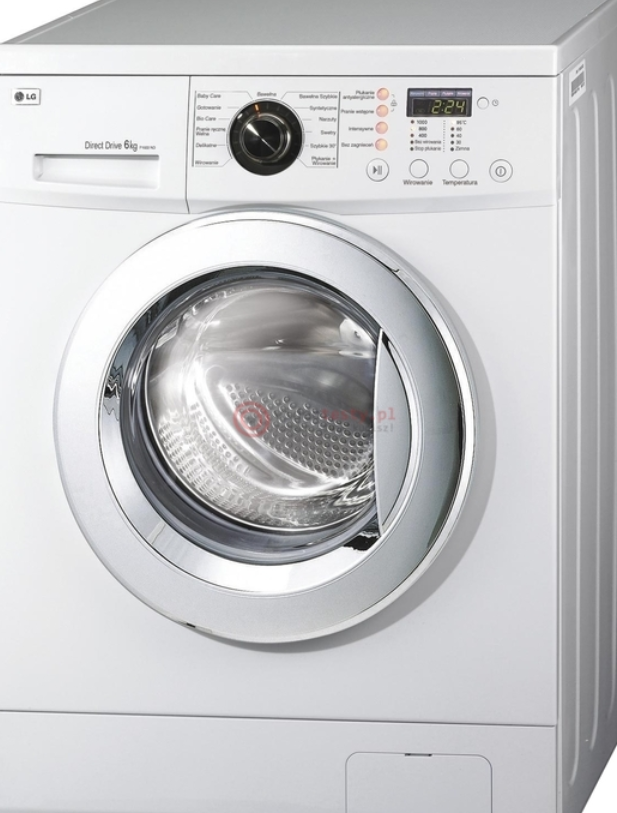
SEE2GET Durability Rating: 9.1/10
LG deserves a place on this list for a different reason.
Its Direct Drive architecture eliminates the conventional belt between the motor and drum.
That makes the drivetrain mechanically interesting and reduces the number of moving components in the drive system.
Older LG Direct Drive machines have also accumulated a substantial installed base, and repair documentation exists for bearing and seal work across numerous older WD-series machines.
LG Direct Drive rating
| Category | Score |
|---|---|
| Motor/drivetrain | 9.6/10 |
| Mechanical durability | 9.1/10 |
| Repairability | 8.9/10 |
| Parts availability | 9.0/10 |
| Used-market value | 9.4/10 |
| Long-term potential | 9.2/10 |
| Overall | 9.1/10 |
Why the motor matters
The motor is one of the hardest-working components in a washing machine.
LG’s Direct Drive design puts the motor directly on the drum rather than using a conventional belt-driven arrangement.
That’s elegant engineering.
And if you’re buying used, a machine with a healthy Direct Drive system can be extremely attractive.
But don’t make this mistake
A Direct Drive motor doesn’t mean the entire washing machine is indestructible.
Bearings can still fail.
The drum spider can still corrode.
Electronic modules can still develop faults.
And older LG machines may require substantial disassembly for bearing replacement.
So inspect the machine just as carefully as you would a Bosch or Miele.
Best used-buy strategy
Look for an older LG Direct Drive that:
- Runs quietly
- Has no drum play
- Has a healthy door seal
- Doesn’t show LE or motor-related errors
- Spins smoothly
- Has no corrosion
- Has been maintained properly
SEE2GET verdict: One of the best used options if you specifically value a robust, beltless drivetrain.
5. Older AEG Lavamat — Best Repairable European Alternative

SEE2GET Durability Rating: 8.8/10
AEG is a more complicated recommendation because the exact generation matters enormously.
Some older Lavamat models are excellent used purchases because their tanks can be opened and bearings replaced without destroying the tub.
For example, repair documentation for an older AEG Lavamat L62610 describes a bolted tank that allows bearing replacement rather than requiring the entire tub to be discarded.
That’s exactly the kind of architecture we’re looking for.
AEG rating
| Category | Score |
|---|---|
| Mechanical durability | 8.9/10 |
| Repairability | 9.1/10 |
| Parts availability | 8.8/10 |
| Build quality | 8.8/10 |
| Used-market value | 9.1/10 |
| Long-term potential | 8.7/10 |
| Overall | 8.8/10 |
The important warning
Don’t assume every AEG Lavamat is equally repairable.
Some later machines use construction that makes bearing replacement considerably less attractive. Repair reports on newer AEG models demonstrate why you need to verify the exact machine before buying.
That’s a general rule worth remembering:
Model number beats brand name.
Best strategy
Search specifically for older models where:
- The tub is bolted
- Bearings are available separately
- The drum spider is available
- Pumps and valves are standard/serviceable
- Parts are still easy to obtain
SEE2GET verdict: A potentially excellent bargain, but only when you’ve confirmed the construction of the exact model.
The 5 Models Compared
| Machine | Durability | Repairability | Parts | Used value | Risk |
|---|---|---|---|---|---|
| Bosch WAE | ⭐⭐⭐⭐⭐ | ⭐⭐⭐⭐⭐ | ⭐⭐⭐⭐⭐ | ⭐⭐⭐⭐⭐ | Low–medium |
| Miele W1 | ⭐⭐⭐⭐⭐ | ⭐⭐⭐⭐½ | ⭐⭐⭐⭐⭐ | ⭐⭐⭐⭐ | Medium |
| Siemens iQ/iQ500 | ⭐⭐⭐⭐½ | ⭐⭐⭐⭐½ | ⭐⭐⭐⭐⭐ | ⭐⭐⭐⭐½ | Low–medium |
| LG Direct Drive | ⭐⭐⭐⭐½ | ⭐⭐⭐⭐ | ⭐⭐⭐⭐½ | ⭐⭐⭐⭐½ | Medium |
| Older AEG Lavamat | ⭐⭐⭐⭐ | ⭐⭐⭐⭐½ | ⭐⭐⭐⭐ | ⭐⭐⭐⭐⭐ | Medium |
What Makes These Machines Different?
The important thing isn’t simply that these brands have good reputations.
It’s that good examples tend to have repairable architecture.
Consider the difference.
Machine A
A bearing fails.
The drum assembly is sealed and the repair requires replacing an expensive complete assembly.
Machine B
A bearing fails.
A technician can open the tub, replace the bearing and seal, and put the machine back into service.
The second machine has a much larger durability margin.
The machine isn’t necessarily better because it never breaks.
It’s better because when something eventually breaks, you have a realistic path to repairing it.
The Most Important Used-Washing-Machine Test
If you only do one thing before buying a used washing machine, do this:
Listen to it during high-speed spin.
A healthy machine should produce a consistent mechanical sound.
What you don’t want to hear:
“GRRRRRRRRRRRRRRR.”
A deep rumbling or grinding noise can indicate worn drum bearings.
Also watch the drum.
If it has obvious vertical play when you lift it gently, that’s a warning sign.
Check these five things
| Test | Good result | Warning |
|---|---|---|
| Drum rotation | Smooth and quiet | Grinding |
| Drum movement | Minimal play | Significant movement |
| Spin cycle | Stable | Violent vibration |
| Drain | Fast | Slow/noisy |
| Cabinet | Dry and clean | Rust/leaks |
Don’t Be Afraid of a Cheap Repair
This is where used appliances get interesting.
Suppose you buy a quality Bosch for €80.
The pump fails.
A replacement pump might be inexpensive.
You now have a machine that has cost you considerably less than buying a new appliance.
The economics become even more attractive when the machine has a strong parts ecosystem.
The opposite is also true.
A €150 washing machine with a severely worn bearing, damaged drum spider and corroded cabinet may be worth zero.
The purchase price doesn’t tell you the value.
The remaining mechanical life does.
How Much Should You Pay?
There is no universal price because local used markets vary enormously.
Instead, think in terms of condition and remaining life.
| Condition | Buying strategy |
|---|---|
| Excellent, recently serviced | Worth paying more |
| Clean, quiet, fully working | Excellent target |
| Cosmetic damage only | Often a bargain |
| Minor pump/door-seal issue | Potential bargain if priced accordingly |
| Bearing noise | Buy only if repair economics make sense |
| Rust around tub/cabinet | Usually avoid |
| Drum has major play | Avoid unless extremely cheap |
| Electronics intermittently failing | Avoid |
| Seller refuses a test | Avoid |
A cheap washing machine is only cheap if you don’t immediately have to rebuild it.
What We Would Avoid
When shopping specifically for long-term used ownership, we’d be cautious about machines that combine:
- Poor parts availability
- Sealed/non-serviceable assemblies
- Severe corrosion
- Unknown electronic faults
- Damaged drum spiders
- Major bearing noise
- Very high mileage
- No identifiable model number
- No access to replacement parts
We’re also skeptical of buying solely because a machine is “only three years old.”
Age isn’t everything.
A three-year-old washing machine used several times every day in a large household can have more wear than a carefully maintained eight-year-old machine used a few times a week.
The Secret: Buy the Owner, Not Just the Machine
When buying used, ask the seller questions.
Good questions
How old is it?
How many people used it?
Was it used every day?
Has anything been replaced?
Does it make any unusual noise during spin?
Does it leak?
Why are you selling it?
Can I see it working?
The answers can tell you almost as much as the machine itself.
Someone selling a 10-year-old Miele because they’re renovating their kitchen is a very different proposition from someone selling a 6-year-old machine because “it started making a strange noise.”
Used Washing Machine Buying Checklist
Before handing over your money, check every item below.
Exterior
- No serious rust
- Door closes properly
- Hinges aren’t loose
- Detergent drawer isn’t badly damaged
- No evidence of major leaks
Drum
- Spins freely
- No grinding
- Minimal vertical play
- No scraping
- Spider isn’t visibly corroded
During operation
- Fills normally
- Heats water
- Drains quickly
- Reaches high spin
- Doesn’t shake excessively
- No error codes
Serviceability
- Model number is visible
- Replacement bearings available
- Pump available
- Door seal available
- Electronics available
- Service information exists
Our Ranking: Which One Would We Actually Buy?
🥇 Bosch WAE — Best Cheap Buy
If we’re spending as little as possible, this is our first target.
Why: excellent used-market availability, straightforward engineering, plentiful parts and strong repairability.
Ideal buyer: someone who wants maximum value for minimum money.
🥈 Miele W1 — Best Long-Term Buy
If we find a clean W1 at a reasonable price, we’d take it very seriously.
Why: premium construction, excellent parts support and an engineering philosophy centered around long service.
Ideal buyer: someone willing to spend more initially to get a machine with substantial remaining life.
🥉 Siemens iQ / iQ500 — Best Alternative to Bosch
A great choice if the right Siemens appears at a better price.
Why: strong engineering and access to the BSH ecosystem.
Ideal buyer: someone shopping the used market without being tied to a particular badge.
4. LG Direct Drive — Best Drivetrain
The Direct Drive system is one of the most interesting architectures available in the used market.
Why: robust motor/drivetrain design and excellent availability of older machines.
Ideal buyer: someone who values mechanical simplicity and wants a modern-feeling alternative to older European machines.
5. Older AEG Lavamat — Best Hidden Bargain
This is the sleeper pick.
Why: certain older Lavamat models have very repair-friendly construction and can be bought cheaply.
Ideal buyer: someone willing to research the exact model before buying.
Final Verdict
If you’re looking for a cheap used washing machine that could realistically serve for many more years, don’t chase the newest model.
Look for good engineering that has already survived the first part of its life.
Our five best targets are:
- Bosch WAE — the bargain king
- Miele W1 — the premium long-term choice
- Siemens iQ/iQ500 — the Bosch alternative
- LG Direct Drive — the drivetrain specialist
- Older AEG Lavamat — the repairable sleeper
The most important point is that buying used changes the definition of “best.”
When buying new, you may care about efficiency, features, touchscreen controls, Wi-Fi and a beautiful design.
When buying used, we’d put the priorities in a different order:
Condition → mechanical architecture → repairability → parts availability → purchase price → features.
A boring 10-year-old machine with a healthy drum, accessible parts and a repairable design can be a much smarter purchase than a shiny newer washer that’s difficult or uneconomical to repair.
That’s the real advantage of buying used: you’re not buying age—you’re buying the useful life that’s still left inside the machine.
SEE2GET Bottom Line
If you find a clean Bosch WAE at a low price, buy it. If you find a well-maintained Miele W1 at a reasonable price, seriously consider paying more. And whatever model you choose, never buy a used washing machine without hearing it spin.
Note: we discussed premium models here.
One Reply to “5 Best Used Washing Machines That Are Cheap to Buy and Built to Last”
Comments are closed.