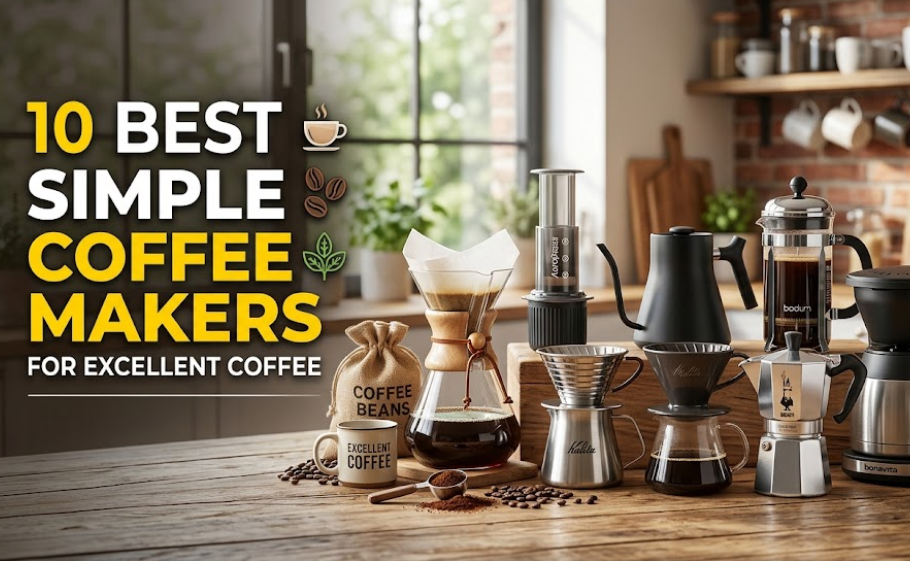
In most cases, people don’t need an expensive coffee maker with an integrated assistant and a bunch of extra features. All they really need is a machine that makes excellent coffee. In this article, we’ll explore 10 coffee makers that focus on what truly matters: great coffee without unnecessary bells and whistles.
A good coffee maker doesn’t need a touchscreen, Wi-Fi connection, personalized drink profiles, or a complicated menu. It needs to heat water properly, distribute it evenly over the coffee grounds, and deliver a consistently satisfying cup. For manual brewers, the priorities are even simpler: a reliable design, good extraction, and easy cleaning.
Of course, not everyone drinks coffee the same way. Some people want a full pot ready for breakfast, while others prefer a rich French press or a concentrated espresso. That’s why our selection includes several brewing styles, from straightforward automatic drip machines to uncomplicated manual brewers.
Our focus is on coffee quality, ease of use, practical design, and value—not the number of features. The ratings below are editorial assessments based on these criteria and published product evaluations, not claims that SEE2GET physically tested every model.
Quick summary: The best simple coffee makers
| Rank | Coffee maker | Best for | Editorial rating |
|---|---|---|---|
| 1 | Technivorm Moccamaster KBGV Select | Excellent drip coffee with minimal controls | 9.5/10 |
| 2 | Bonavita Connoisseur BV1901TS | Straightforward, everyday drip coffee | 9.2/10 |
| 3 | OXO Brew 9-Cup Coffee Maker | Consistent coffee for households | 9.1/10 |
| 4 | Zojirushi Zutto 5-Cup | Small kitchens and smaller batches | 9.0/10 |
| 5 | Ratio Six | Minimalist design and refined drip brewing | 9.0/10 |
| 6 | AeroPress Original | Versatile, quick single servings | 9.2/10 |
| 7 | Hario V60 Ceramic Dripper | Hands-on pour-over coffee | 9.0/10 |
| 8 | Bodum Chambord French Press | Full-bodied coffee with little equipment | 8.9/10 |
| 9 | Bialetti Moka Express | Strong, espresso-style stovetop coffee | 8.8/10 |
| 10 | De’Longhi Stilosa EC260 | Simple home espresso on a budget | 8.5/10 |
Ratings reflect our editorial assessment of brewing potential, simplicity, everyday practicality, and value. They are not laboratory measurements or firsthand SEE2GET test scores. Prices vary by market, retailer, and model version.
1. Technivorm Moccamaster KBGV Select — Best Overall
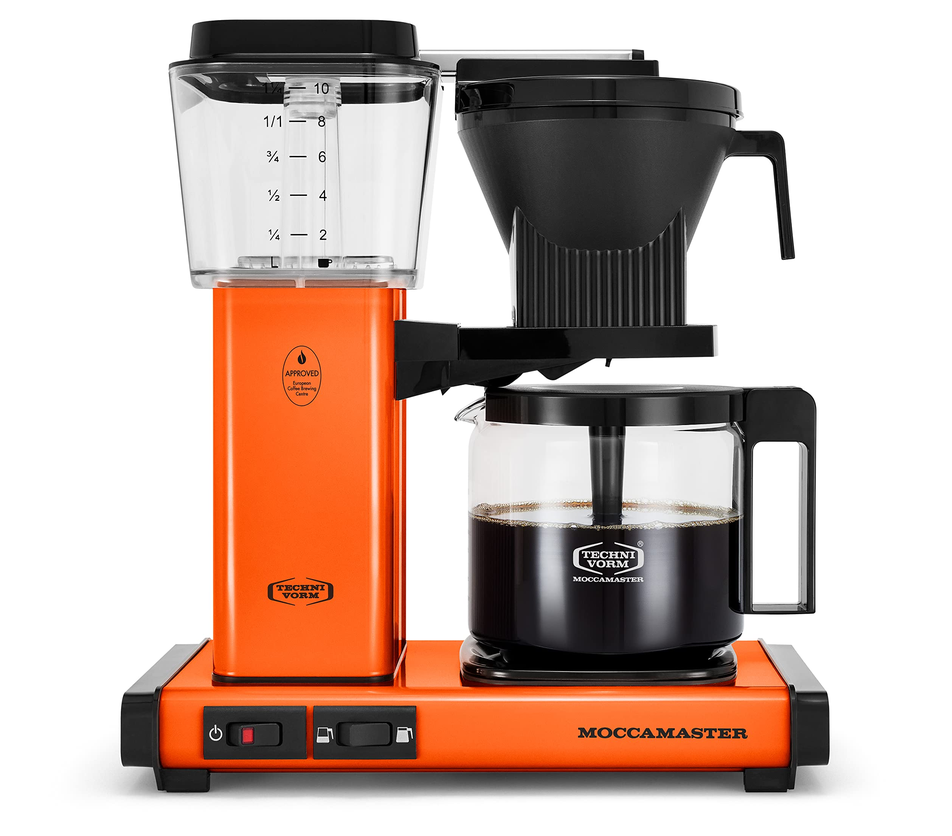
Editorial rating: 9.5/10
The Technivorm Moccamaster KBGV Select is an excellent example of what happens when a manufacturer concentrates on the essentials. Rather than surrounding the user with menus and settings, it focuses on brewing a good pot of filter coffee with minimal intervention.
Its straightforward controls make it particularly appealing to people who want a reliable morning routine. Add water, put ground coffee in the filter basket, select the appropriate brewing mode, and start the machine.
The Moccamaster has also earned a strong reputation among coffee enthusiasts for its brewing performance and long-term serviceability. Independent reviewers continue to highlight its combination of consistent brewing and uncomplicated operation. Bon Appétit, for example, describes the machine’s controls as notably simple and reports that its test kitchen has used the same unit for years.
Why we recommend it
- Simple controls without a complicated digital interface.
- Brews a full pot relatively quickly.
- Designed around conventional filter coffee rather than a multitude of drink options.
- A strong candidate for buyers who value longevity and repairability.
- Available in different colors to suit different kitchens.
What to consider
The main disadvantage is its price. It’s substantially more expensive than a basic supermarket coffee maker, and its straightforward design means you don’t get every convenience feature available on modern machines.
For buyers who care about the coffee itself, however, that simplicity can be a benefit rather than a drawback.
Best for: Coffee drinkers who want a premium drip machine without an unnecessarily complicated interface.
2. Bonavita Connoisseur BV1901TS — Best for Straightforward Daily Brewing

Editorial rating: 9.2/10
The Bonavita Connoisseur is aimed at people who want good filter coffee without turning breakfast into a technical exercise.
Its appeal lies in its relatively simple operation and thermal carafe. A thermal carafe can help keep coffee warm without relying on a hot plate, which may gradually change the taste of coffee as it sits.
The machine is a particularly interesting choice for buyers who care more about brewing performance than programmable schedules or connected features.
Advantages
- Simple one-touch brewing.
- Thermal carafe for keeping coffee warm.
- Compact design relative to some larger drip machines.
- A practical choice for everyday filter coffee.
Disadvantages
- Limited control over brewing variables.
- Availability and pricing can vary by country.
- The thermal carafe still needs regular cleaning to prevent coffee-oil buildup.
The Bonavita is a strong option for people who want to fill a reservoir, add ground coffee, press a button, and get on with their morning.
Best for: Households that want uncomplicated drip coffee without paying for an elaborate control panel.
3. OXO Brew 9-Cup Coffee Maker — Best for Consistent Household Brewing
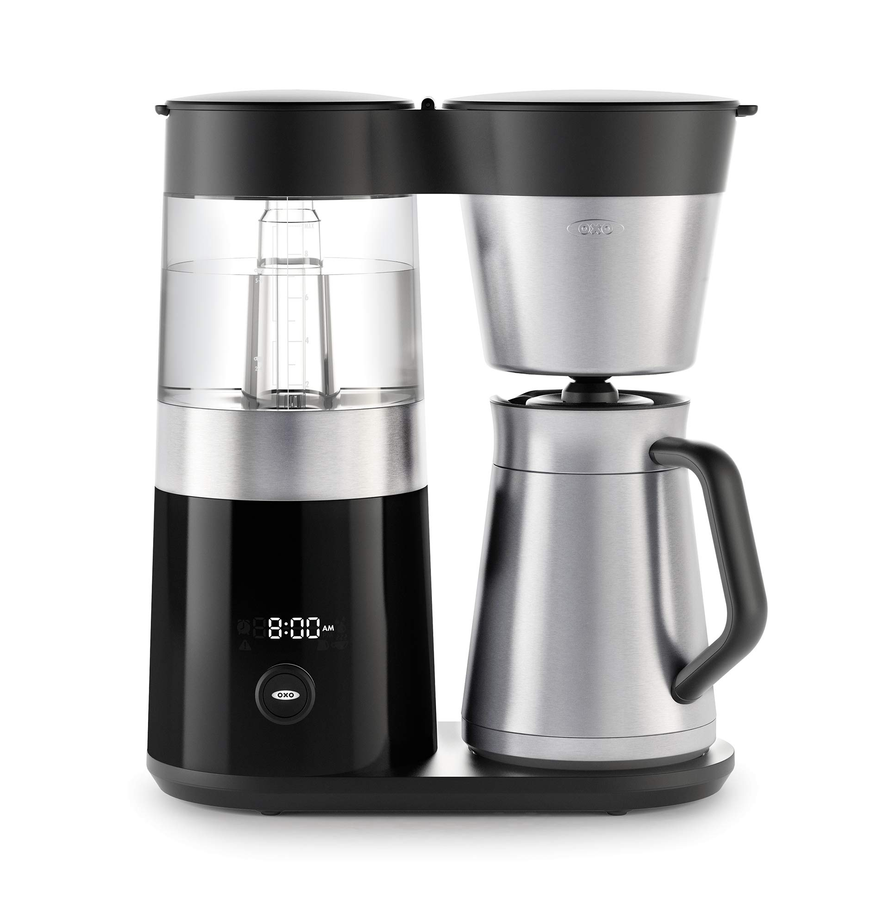
Editorial rating: 9.1/10
The OXO Brew 9-Cup is a good choice for people who want excellent filter coffee with a little more convenience than a completely basic machine.
It does have programmable functionality, so it isn’t the purest example of a no-frills coffee maker. Nevertheless, its appeal is rooted in brewing performance rather than an endless list of features.
The machine is designed to manage water distribution and brewing conditions to help extract flavor evenly from the coffee grounds. Independent evaluations have praised OXO’s drip machines for their ability to produce flavorful coffee. Bon Appétit’s 2026 guide highlights the brand’s consistent performance and includes the OXO Brew 9-Cup among its recommended options. Source: Bon Appétit
Advantages
- Suitable for households that regularly brew several cups.
- Designed for controlled water distribution.
- Useful balance between simplicity and convenience.
- A good alternative to premium machines at the very top of the market.
Disadvantages
- More expensive and complicated than the simplest drip brewers.
- Takes up more counter space than a small manual brewer.
- Some of its convenience features may be unnecessary for buyers who want the absolute minimum.
Best for: People who want consistently good filter coffee and appreciate a few practical conveniences.
4. Zojirushi Zutto 5-Cup — Best for Small Kitchens

Editorial rating: 9.0/10
Not everyone needs a coffee maker that produces enough coffee for an entire family. If you normally drink one or two cups at a time, a smaller machine can be the more sensible purchase.
The Zojirushi Zutto is a compact drip coffee maker designed around smaller batches. Its modest capacity makes it suitable for apartments, small kitchens, and households where a large carafe would go mostly unused.
It is also a useful reminder that a coffee maker doesn’t need to be expensive to serve its purpose well. WIRED’s 2026 coffee-maker guide highlights the Zutto as an option for buyers seeking a drip coffee maker under $100.
Advantages
- Compact footprint.
- Practical capacity for one or two coffee drinkers.
- Straightforward operation.
- Generally more approachable in price than premium drip machines.
Disadvantages
- Limited capacity for guests.
- Fewer brewing adjustments than enthusiast-oriented machines.
- Small models still require regular descaling and cleaning.
Best for: People who want a simple automatic coffee maker without sacrificing kitchen space.
5. Ratio Six — Best for Minimalist Design
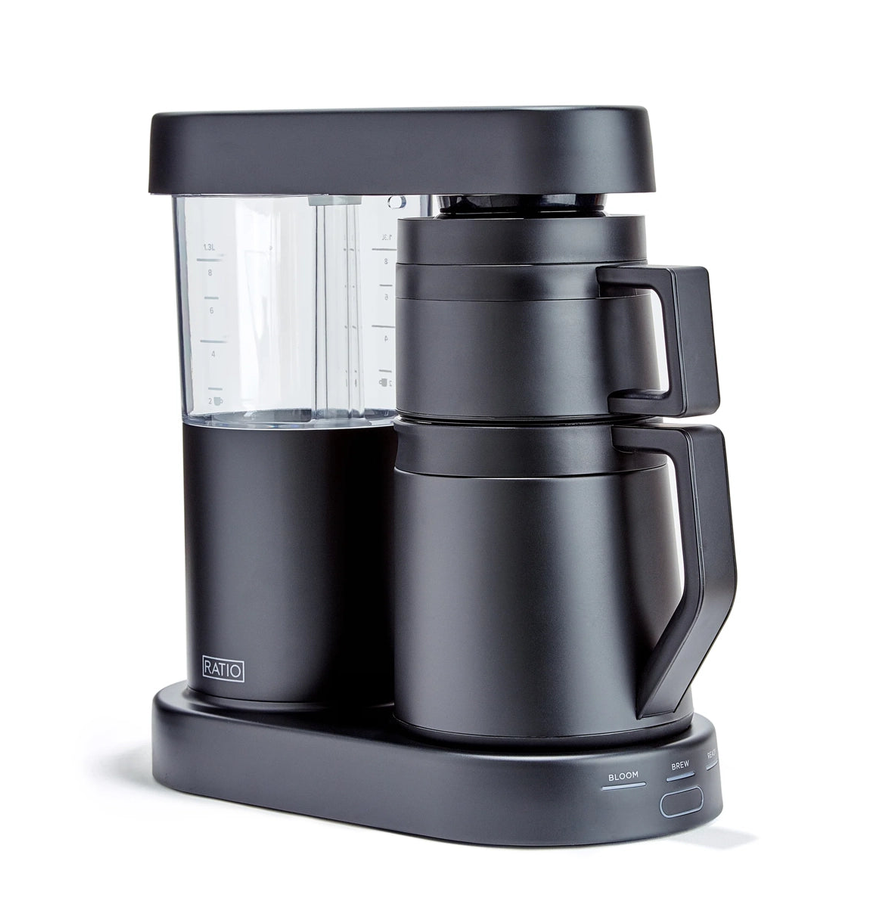
Editorial rating: 9.0/10
The Ratio Six is designed for coffee drinkers who appreciate both good brewing and clean industrial design.
It avoids the appearance of a complicated electronic appliance. Instead, it emphasizes a streamlined brewing process and a minimalist exterior.
That doesn’t mean it is the cheapest option on this list. Its price places it in the premium category, so it makes the most sense for someone who values its particular design and brewing approach.
Bon Appétit’s 2026 drip coffee maker guide identifies the Ratio Six as a simple machine worth considering for people who want a more refined alternative to conventional drip coffee makers. Source: Bon Appétit
Advantages
- Clean, minimalist appearance.
- Focus on the fundamentals of filter coffee.
- Suitable for people who dislike cluttered control panels.
- An attractive option for design-conscious kitchens.
Disadvantages
- Premium pricing.
- Less suitable for buyers who simply want the cheapest way to brew coffee.
- Its minimalist appearance may not justify the extra cost for everyone.
Best for: Buyers who want a well-designed coffee maker that looks as simple as it is to use.
6. AeroPress Original — Best for Versatile Single Servings
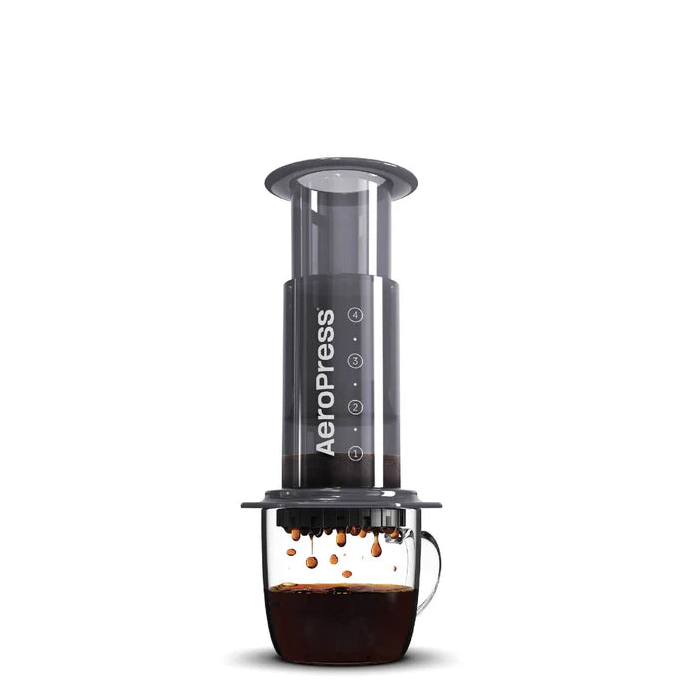
Editorial rating: 9.2/10
The AeroPress Original takes a different approach to coffee brewing. Instead of relying on an electric heating element and a carafe, it uses a compact manual brewing chamber, a filter, and a plunger.
You supply hot water, add coffee, allow the grounds to brew, and press the coffee through the filter. The process is quick, and the equipment is small enough to store in a drawer or pack for travel.
The AeroPress is particularly appealing to people who want control over their cup without buying an expensive machine. By changing the grind size, coffee-to-water ratio, steeping time, and water temperature, you can experiment with different flavor profiles.
Advantages
- Compact and portable.
- No electricity required during brewing.
- Quick cleanup compared with many larger coffee makers.
- Flexible brewing ratios and methods.
- Useful at home, at work, or while traveling.
Disadvantages
- Requires hot water from a kettle or another source.
- Produces relatively small batches.
- Involves more manual effort than an automatic drip machine.
- Requires filters and replacement parts over time.
The AeroPress doesn’t automatically produce better coffee than every electric machine. Its advantage is that it offers a flexible brewing method without the cost, space requirements, or complexity of a traditional appliance.
Best for: People who usually make one cup at a time and enjoy a little control over the brewing process.
7. Hario V60 Ceramic Dripper — Best for Hands-On Pour-Over Coffee

Editorial rating: 9.0/10
For people who want to focus on the brewing process itself, the Hario V60 is one of the simplest options available.
The ceramic dripper sits on top of a cup or server. You insert a paper filter, add ground coffee, and slowly pour hot water over the grounds.
There is no motor, touchscreen, automatic cleaning cycle, or programmable timer. The brewer’s simplicity is precisely the point.
The V60 is especially popular among people who enjoy experimenting with different coffees. Small changes in grind size, pouring technique, water temperature, and brewing time can noticeably affect the final cup.
Advantages
- Affordable entry into manual specialty coffee brewing.
- Compact and easy to store.
- No electrical components.
- Easy to clean.
- Offers considerable control over the brewing process.
Disadvantages
- Requires a kettle and a separate source of hot water.
- Needs some practice for consistent results.
- Paper filters are an ongoing expense.
- Not ideal for someone who wants coffee ready at the press of a button.
Best for: Coffee enthusiasts who enjoy preparing their drink by hand and want to learn how brewing variables affect flavor.
8. Bodum Chambord French Press — Best for Full-Bodied Coffee
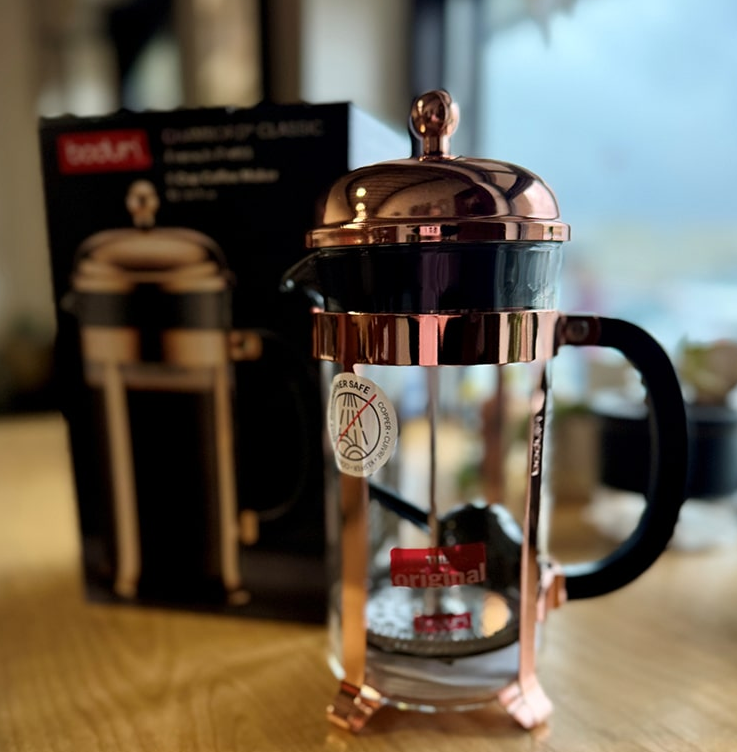
Editorial rating: 8.9/10
A French press is one of the most straightforward ways to prepare coffee. It doesn’t require electricity, complicated settings, or a collection of accessories.
The Bodum Chambord uses a glass carafe, a metal frame, and a plunger fitted with a mesh filter. You add ground coffee and hot water, let the mixture steep, and press the plunger down.
Because the metal filter allows more oils and fine particles into the cup than a typical paper filter, French press coffee often has a fuller body and a slightly different texture from drip coffee.
Advantages
- Very simple brewing process.
- No electricity required.
- Reusable metal filter.
- Suitable for brewing several servings in one batch, depending on the size.
- Easy to understand and operate.
Disadvantages
- Glass can break if dropped or handled carelessly.
- Requires manual cleaning after each use.
- Fine sediment may remain in the cup.
- Coffee can become over-extracted if left in contact with the grounds for too long.
The Chambord is a good option for people who prefer a richer, heavier cup and don’t need the convenience of an automatic machine.
Best for: Drinkers who like full-bodied coffee and want a reusable, uncomplicated brewer.
9. Bialetti Moka Express — Best for Strong Stovetop Coffee

Editorial rating: 8.8/10
The Bialetti Moka Express has been a familiar fixture in kitchens for generations. Its basic design has changed relatively little because its brewing method is already straightforward.
Water sits in the lower chamber, ground coffee goes into the filter basket, and heat drives water through the grounds into the upper chamber.
The result is concentrated coffee with a strong flavor. It isn’t technically espresso, because a moka pot operates at a much lower pressure than a conventional espresso machine, but it can serve as a satisfying alternative for people who enjoy strong coffee.
Advantages
- No electronic components or complicated controls.
- Compact and easy to store.
- No paper filters required.
- Produces concentrated coffee.
- Available in multiple sizes.
Disadvantages
- Requires a stove or another compatible heat source.
- Needs careful handling while hot.
- Grind size and heat management affect the result.
- Not suitable for people who specifically want true espresso with conventional espresso-machine pressure.
The Moka Express is particularly appealing to buyers who value a simple, established design and want strong coffee without an expensive appliance.
Best for: People who enjoy concentrated stovetop coffee and don’t need an automatic espresso machine.
10. De’Longhi Stilosa EC260 — Best Budget Espresso Machine
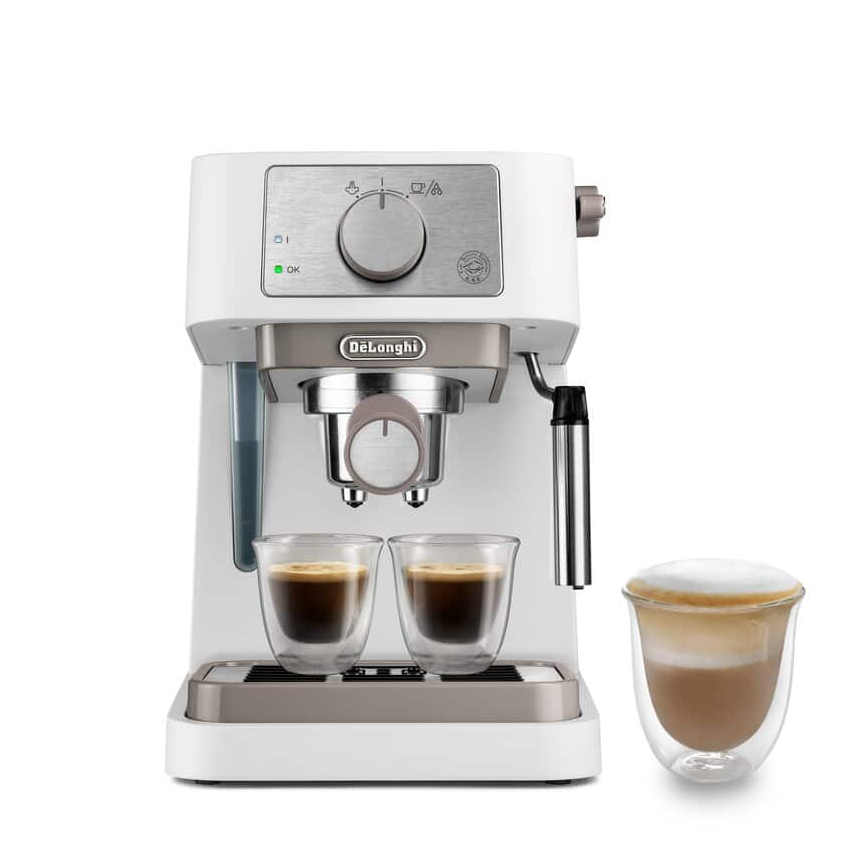
Editorial rating: 8.5/10
Drip coffee and French press brewing aren’t for everyone. If you prefer espresso, cappuccinos, or milk-based drinks, a basic espresso machine may be a better fit.
The De’Longhi Stilosa EC260 is a relatively straightforward entry-level espresso machine. It uses a conventional portafilter-based brewing setup and a manual milk-frothing wand, rather than a built-in grinder, touchscreen, or automatic drink menu.
This approach leaves more of the preparation to the user. You’ll need to grind or buy suitable coffee, dose the portafilter, and learn how to prepare an espresso shot. If you want milk drinks, you’ll also need to froth the milk yourself.
Advantages
- More affordable than many advanced espresso machines.
- Manual brewing process.
- Steam wand for milk-based drinks.
- No built-in coffee menu or complicated digital interface.
- A useful starting point for learning espresso preparation.
Disadvantages
- Requires more practice than an automatic machine.
- Does not include a built-in grinder.
- Espresso quality depends heavily on the coffee, grind, dose, and technique.
- Cleaning the portafilter and steam wand takes time.
An entry-level espresso machine can be a sensible purchase, but it isn’t necessarily the easiest route to a good cup. For many beginners, a simple drip machine or AeroPress is more forgiving.
Best for: People who want to learn espresso preparation without paying for a fully automatic machine.
Comparison table: Which simple coffee maker should you choose?
| Model | Brewing method | Electricity needed for brewing? | Typical batch size | Main advantage | Main limitation |
|---|---|---|---|---|---|
| Technivorm Moccamaster KBGV Select | Automatic drip | Yes | Full pot or smaller batch | Excellent filter coffee with simple controls | Expensive |
| Bonavita Connoisseur | Automatic drip | Yes | Multi-cup pot | Straightforward daily brewing | Limited adjustments |
| OXO Brew 9-Cup | Automatic drip | Yes | Multi-cup pot | Convenience and consistency | More features than strictly necessary |
| Zojirushi Zutto 5-Cup | Automatic drip | Yes | Small pot | Compact size | Limited capacity |
| Ratio Six | Automatic drip | Yes | Multi-cup pot | Minimalist design | Premium price |
| AeroPress Original | Manual immersion and pressure | No, but needs hot water | One serving at a time | Portable and versatile | Requires manual preparation |
| Hario V60 Ceramic | Manual pour-over | No, but needs hot water | One or a few servings | Control over extraction | Technique matters |
| Bodum Chambord | French press | No, but needs hot water | One or several servings, depending on size | Full-bodied coffee | More sediment and cleanup |
| Bialetti Moka Express | Stovetop pressure brewing | No electricity, but needs heat | Small concentrated servings | Strong coffee in a simple design | Requires heat management |
| De’Longhi Stilosa EC260 | Pump espresso | Yes | One or two shots per cycle | Accessible entry into espresso | Requires practice and a separate grinder for freshly ground beans |
Capacities and operating requirements vary by exact model and configuration. Manual brewers need an external source of hot water, and moka pots need a suitable heat source.
What actually makes a coffee maker good?
The number of features on a coffee maker tells you surprisingly little about the quality of the coffee it produces. A more useful way to evaluate a machine is to look at the fundamentals of extraction and everyday use.
1. Water temperature
Water that is too cool can produce weak, under-extracted coffee. Water that is too hot or used improperly can contribute to unpleasant flavors.
For conventional drip coffee, a brewing temperature around 195–205°F (90–96°C) is a widely used reference range. Temperature is only one part of the process, however: grind size, contact time, coffee freshness, and water quality matter too.
2. Even water distribution
In a drip coffee maker, water should reach the coffee grounds reasonably evenly. If some grounds become saturated while others remain dry, the resulting extraction can be inconsistent.
A well-designed showerhead and filter basket can help. With manual brewing, the user has more influence over how the water reaches the grounds.
3. Appropriate brewing time
Coffee needs enough contact with water to extract its desirable flavors. Too little contact can produce a thin or sour-tasting cup; too much can lead to excessive bitterness and astringency.
The ideal brewing time depends on the method, grind size, and recipe. A French press, espresso machine, and drip brewer should not be judged by the same timing standard.
4. Easy cleaning
Coffee oils accumulate over time, and mineral deposits can build up inside machines that heat water. Both can affect performance and flavor.
A good coffee maker should be easy to clean and maintain. Removable filter baskets, accessible carafes, straightforward descaling procedures, and readily available replacement parts can matter more over the years than a long list of features.
5. Durability and repairability
A simple machine isn’t automatically a durable machine. Materials, component quality, construction, warranty coverage, and access to spare parts all influence long-term value.
Before buying a more expensive coffee maker, check whether the manufacturer sells replacement carafes, lids, baskets, seals, and other wear components. A machine that can be repaired economically may be a better long-term investment than one that must be replaced after a small component fails.
Do you really need programmable features?
For many people, no.
A programmable timer is useful if you want coffee ready when you wake up. An insulated carafe can be worthwhile if you drink coffee over several hours. A grinder can save counter space if you regularly buy whole beans.
But many other features are optional conveniences rather than necessities.
| Feature | Is it worth paying extra for? | Who benefits most? |
|---|---|---|
| Programmable timer | Sometimes | People who want coffee ready at a set time |
| Integrated grinder | Depends | People who use whole beans and want an all-in-one appliance |
| Wi-Fi or app control | Usually unnecessary for basic brewing | People who specifically value remote operation |
| Touchscreen | Rarely essential | Buyers who prefer digital controls |
| Automatic milk system | Only if regularly used | People who frequently make cappuccinos or lattes |
| Multiple drink presets | Depends on habits | Households with different drink preferences |
| Thermal carafe | Often useful | People who drink coffee gradually |
| Adjustable brew strength | Useful, but not essential | People who frequently change coffee or batch size |
| Automatic descaling reminder | Convenient | People who want maintenance prompts |
| Built-in hot-water dispenser | Situational | Households that also prepare tea or other hot drinks |
The simplest approach is to identify which features solve a problem you actually have. If you always brew the same coffee the same way, paying extra for dozens of settings may offer little practical value.
How to get better coffee from a basic machine
You don’t necessarily need to upgrade your coffee maker to improve your morning cup. A few changes to your routine can make a noticeable difference.
Use fresh coffee
Coffee gradually loses aroma after roasting, and ground coffee loses freshness more quickly than whole beans because more of its surface is exposed to air.
Buy an amount you can reasonably use while it remains fresh, store it in a sealed container away from heat and sunlight, and grind it shortly before brewing when possible.
Choose the right grind size
Grind size affects how quickly water extracts flavor from coffee.
- Drip coffee: Start with a medium grind.
- French press: Start with a coarse grind.
- Pour-over: Start with a medium to medium-fine grind and adjust to taste.
- Moka pot: Use a fine grind, but generally not as powdery as a typical espresso grind.
- Espresso: Use a suitable espresso grind and adjust it to the machine and coffee.
These are starting points, not universal rules. If your coffee tastes too sour or weak, adjust one variable at a time.
Measure your coffee and water
Using roughly the same coffee-to-water ratio each time makes it easier to reproduce a good result.
A useful starting point for filter coffee is around 60 grams of coffee per liter of water. You can adjust this to taste, using a little more coffee for a stronger brew or a little less for a lighter cup.
A kitchen scale is helpful, but you don’t need an expensive coffee machine with a built-in weighing system to use one.
Pay attention to water quality
Water makes up most of the finished drink, so its taste matters. If your tap water has a strong chlorine flavor or an unpleasant mineral character, try filtered water and compare the results.
Very hard water can also contribute to scale buildup inside heating appliances. Follow the manufacturer’s guidance on descaling and water treatment.
Clean the machine regularly
Old coffee oils can create stale, bitter flavors. Mineral scale can interfere with heating and water flow.
Wash removable components regularly, clean carafes and filter baskets, and descale electric machines as directed by their manufacturers. Don’t assume that a machine needs less maintenance simply because it has fewer features.
Is an expensive coffee maker worth it?
Sometimes—but the reason should be the coffee and the machine’s construction, not the price tag alone.
A premium machine may offer better control over brewing temperature, improved water distribution, a more durable design, or access to replacement parts. Those benefits can be worthwhile if you brew coffee every day and appreciate the difference.
However, a simple manual brewer can also produce excellent coffee. The AeroPress, Hario V60, and French press demonstrate that a complicated appliance isn’t necessary to make a satisfying cup.
The best choice depends on how you prepare coffee, how many servings you need, and how much effort you’re willing to put into the process.
If you only want one cup in the morning, a large premium drip machine may be unnecessary. If you routinely serve several people, a small manual brewer could become inconvenient. Match the machine to your habits rather than paying for features you rarely use.
Final verdict: Buy for the coffee, not the feature list
The best coffee maker is the one that fits your daily routine and consistently produces coffee you enjoy.
For most people who prefer filter coffee, the Technivorm Moccamaster KBGV Select is a compelling premium option thanks to its straightforward controls and established reputation. The Bonavita Connoisseur is worth considering if you want a simpler everyday drip machine, while the Zojirushi Zutto makes more sense for smaller households.
If you’d rather avoid an electric appliance altogether, the AeroPress, Hario V60, Bodum Chambord, and Bialetti Moka Express all offer straightforward ways to prepare excellent coffee.
The important lesson is simple: good coffee comes from sound brewing fundamentals, fresh ingredients, and a method that suits your preferences—not from the number of features printed on the box.
Buy the machine that does what you need, learn how to use it well, and don’t feel pressured to pay for a smart assistant when all you want is a great cup of coffee.
Frequently asked questions
What is the best simple coffee maker overall?
The Technivorm Moccamaster KBGV Select is our premium pick for straightforward automatic drip coffee. Buyers on a tighter budget should also consider simpler drip machines or manual brewers.
Can a cheap coffee maker make excellent coffee?
Yes. A well-designed, affordable coffee maker can produce excellent coffee when used with fresh beans, suitable water, and an appropriate grind. More expensive machines may offer better consistency, convenience, or durability, but price alone doesn’t guarantee a better cup.
Is a French press better than a drip coffee maker?
Neither is universally better. A French press generally produces a fuller-bodied cup because its metal filter allows more oils and fine particles through. Drip coffee is usually cleaner in texture, particularly when brewed with a paper filter. The better choice depends on your taste.
Is an espresso machine necessary for making strong coffee?
No. A moka pot or AeroPress can produce concentrated coffee without the cost and complexity of a traditional espresso machine. However, neither is a direct substitute for true espresso brewed under conventional espresso-machine pressure.
Which coffee maker has the fewest features?
Manual brewers such as the Hario V60, French press, and AeroPress have very few components and no electronic controls. They do require more hands-on preparation than an automatic drip machine.
How long should a good coffee maker last?
There is no universal lifespan. Longevity depends on construction quality, frequency of use, cleaning, water hardness, and availability of replacement parts. Look at the warranty and repair options for the specific model rather than assuming that a particular price or brand guarantees a long service life.
Sources and further reading
The following source addresses are provided as plain text, without embedded hyperlinks.
- Bon Appétit — The Best Drip Coffee Makers, Test Kitchen Vetted & Editor Approved (2026)
https://www.bonappetit.com/story/best-drip-coffee-makers - Consumer Reports — 9 Best Drip Coffee Makers of 2026, Tested by Experts
https://www.consumerreports.org/coffee-makers/best-drip-coffee-makers-consumer-reports-tests - WIRED — The Best Coffee Makers of 2026
https://www.wired.com/gallery/best-coffee-makers - Tom’s Guide — Best Coffee Maker 2026: Tested Picks
https://www.tomsguide.com/home/coffee-makers/best-coffee-makers - The Coffee Locator — Best Drip Coffee Makers 2026
https://thecoffeelocator.com/coffee-makers/best-drip-coffee-makers
Editorial note: These sources provide independent context for the product selection and brewing considerations. Product availability, model specifications, and prices should be verified for the target market before publication. The SEE2GET ratings in this article are editorial estimates, not independently measured laboratory results.